









MIKAMI MEME 2025: The Creative Meme of Seiko Mikami – A 10th Anniversary Tribute
Dates: October 18 (Sat) – November 22 (Sat), 2025
* Opening reception at 5pm on Friday, October 17
* Opens on Monday, November 3
Hours: 1pm –7pm (Closed Sundays & Mondays)
Venue:√K Contemporary
Main Organization: Japan Art Inheritance Association
Curation:Yukiko Shikata、Tomoya Watanabe
Participating Artists:Norimizu Ameya, Norimichi Hirakawa, Soichiro Mihara, Yuko Mohri, Fuyuki Yamakawa from Grand Guignol Mirai, yang02
Grants: Arts Council Tokyo [Tokyo Support Program for the Arts and Culture – One-Year Grant] Artistic Creation Activities
√K Contemporary is pleased to announce the upcoming exhibition MIKAMI MEME 2025: The Creative Meme of Seiko Mikami – A 10th Anniversary Tribute, held from Saturday, October 18 through Saturday, November 22, 2025. The exhibition honors the legacy of Seiko Mikami (1961–2015), a pioneering figure whose work significantly contributed to the development of media art.
This year marks ten years since the sudden passing of Seiko Mikami. After gaining early acclaim in the mid-1980s for her sculptural works made from scrap iron, Mikami expanded her artistic inquiry to explore complex themes such as the relationship between the brain and computers, and between the body and immunity. Her residency in New York in the 1990s catalyzed her shift into interactive art, where she remained a leading figure for over two decades. During this time, she also taught and mentored many students at Tama Art University.
Mikami’s work and presence continue to resonate deeply, inspiring artists and thinkers alike. With the accelerated data surveillance, the rise of generative AI, the recent global pandemic, and ongoing conflicts, the issues she grappled with have become even more urgent over the past decade, making this a crucial moment to revisit her visionary practice.
Despite her influence, Mikami’s work has long remained relatively underrecognized. Many of her installations from the 1980s and 1990s were ephemeral or dismantled by the artist herself, and much of her early practice unfolded within underground scenes, while her later work was primarily situated within media art circles. However, interest in her work has grown in recent years, notably following the acquisition of her 1990s pieces by the Museum of Contemporary Art Tokyo.
The exhibition MIKAMI MEME 2025: The Creative Meme of Seiko Mikami introduces works by artists who encountered Mikami and engaged in dialogue with her, inheriting her “meme” (cultural gene) while cultivating their own distinct worlds. Participating artists include Norimizu Ameya, who collaborated with Mikami in the late 1980s; Fuyuki Yamakawa, who served as her assistant in the early 2000s at Tama Art University’s Department of Information Design; and Norimichi Hirakawa, Soichiro Mihara, Yuko Mohri, and yang02—all affiliated with Studio 5, the department’s experimental studio.
Whether consciously or unconsciously, the MIKAMI MEME flows through both their works and their artistic selves.
The concept of MIKAMI MEME can be described as a perspective that perceives the world through flows of information, including invisible ones; a creative embrace of noise and misalignments that arise during information transmission; openness to chance rather than total authorial control; and incorporation of bodily reactions beyond the conscious perception or will of the viewer or participant. Within the MIKAMI MEME, the relationship between artwork and the world emerges as an ongoing dialogue and circulation beyond the work itself.
MIKAMI MEME is an informational node shaped by the many people, encounters, and environmental factors that Mikami experienced over her fifty-year life—it can be seen as Seiko Mikami herself as an information entity. At the same time, the MIKAMI MEME is the product of ongoing interactions with the artists featured in this exhibition and many others.
Through this exhibition, we hope each visitor will find an opportunity to cultivate their own meme, inspired by the artists who have developed their practices from the MIKAMI MEME into new, individual expressions.
An event on Barrikade, originally created by Norimizu Ameya and Seiko Mikami in 1987, will be held by Norimizu Ameya on Monday, November 3 (national holiday) at 2pm – 3pm. Further event details will be announced on here and our social media channels.
◆ Curators
– Yukiko Shikata(Curator / Critic)

Director of Towada Art Center, President of the AICA Japan (Japanese Section of International Association of Art Critics) and Artistic Director of “Foray of Dialog and Creativity.” Visiting professor at Tama Art University and Tokyo Zokei University, and part-time lecturer at Musashino Art University, IAMAS, and Kyoto University of the Arts. Her cross-disciplinary curatorial and critical practice explores the concept of “information flow.” Since the 1990s, she has held roles at Canon ARTLAB (1990–2001), Mori Art Museum (2002–04), and NTT Inter Communication Center [ICC] (2004–10), while also producing independent, pioneering exhibitions and projects. She has served as juror in numerous national and international art awards. Her publications include Ecosophic Art: On Art That Connects Nature, Mind, and Society (2023), among many co-authored works.
(Photo: Kuniya Oyamada)
– Tomoya Watanabe (Yamaguchi Center for Arts and Media [YCAM]Archivist / Documentation Coordinator)

Born in Tokyo in 1984, currently based in Yamaguchi. Since 2010, he has worked at the Yamaguchi Center for Arts and Media [YCAM], handling exhibition and performance documentation, as well as producing re-creations of previously exhibited works. He also manages development of information platforms such as the center’s website and guidebooks.
His co-edited book with Jung-Yeon Ma, “SEIKO MIKAMI: Memory and Record”, was published in 2019 by NTT Publishing.
(🄫 Yamamoto Yuu Illustration Office)
◆ About Seiko Mikami(1991-2015)

Born in 1961, she began presenting large-scale installation works in 1984 focusing on the relationship between the information society and the human body. From 1992 to 2000, she was based in New York and presented numerous works mainly in Europe and the United States. Since 1995, she focused on interactive works centered on perceptual interfaces, including works using gaze input, auditory and internal bodily sounds, tactile-based three-dimensional perception, and gravity as a “sixth sense.” In 2000, she joined the Department of Information Design at Tama Art University. Her work was featured in major exhibitions and media art festivals at institutions such as Yamaguchi Center for Arts and Media [YCAM], NTT Inter Communication Center [ICC], and museums and galleries worldwide. In 2013, her final major work Desire of Codes (2010), commissioned by YCAM, received the Excellence Award in the Art Division at the 16th Japan Media Arts Festival. She continued teaching at Tama Art University until her passing in 2015.
Images (from top)
– Seiko Mikami: New Formations of Annihilation
(Ebisu Beer Factory Research Institute, 1985, Tokyo)
– Molecular Informatics — morphogenic substance via eye tracking Ver.2
(Co-produced with Canon ARTLAB, venue: DEAF – Dutch Electronic Art Festival 1996, Rotterdam) / Photo courtesy: Yukiko Shikata (Canon ARTLAB)
– Eye-Tracking Informatics (ETI) (2011, YCAM),
an updated version of Molecular Informatics (1996) / Collection: YCAM, Photo: Ryuichi Maruo
– Desire of Codes (2010, YCAM) / Collection: YCAM, Photo: Ryuichi Maruo


IMAGES
-
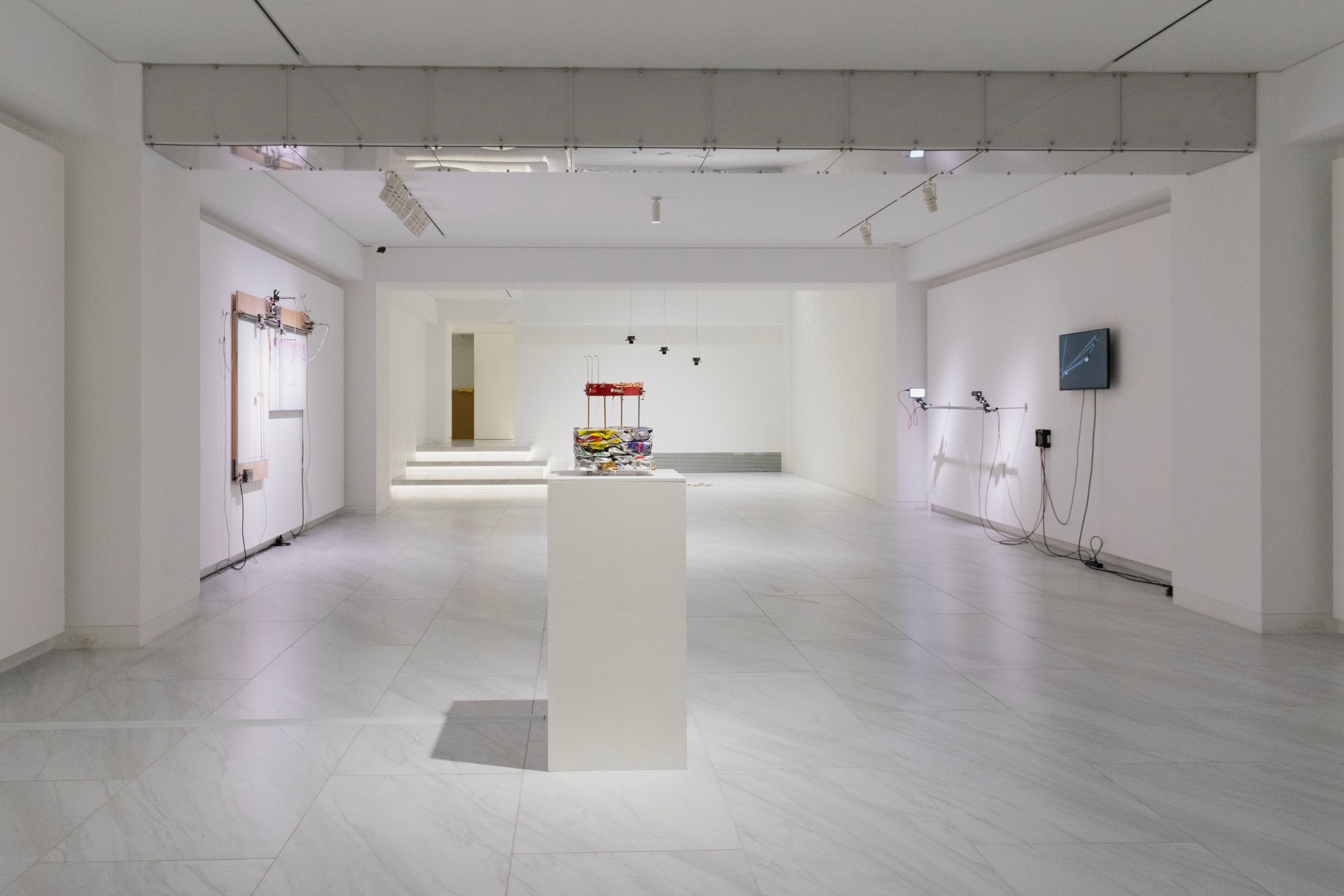
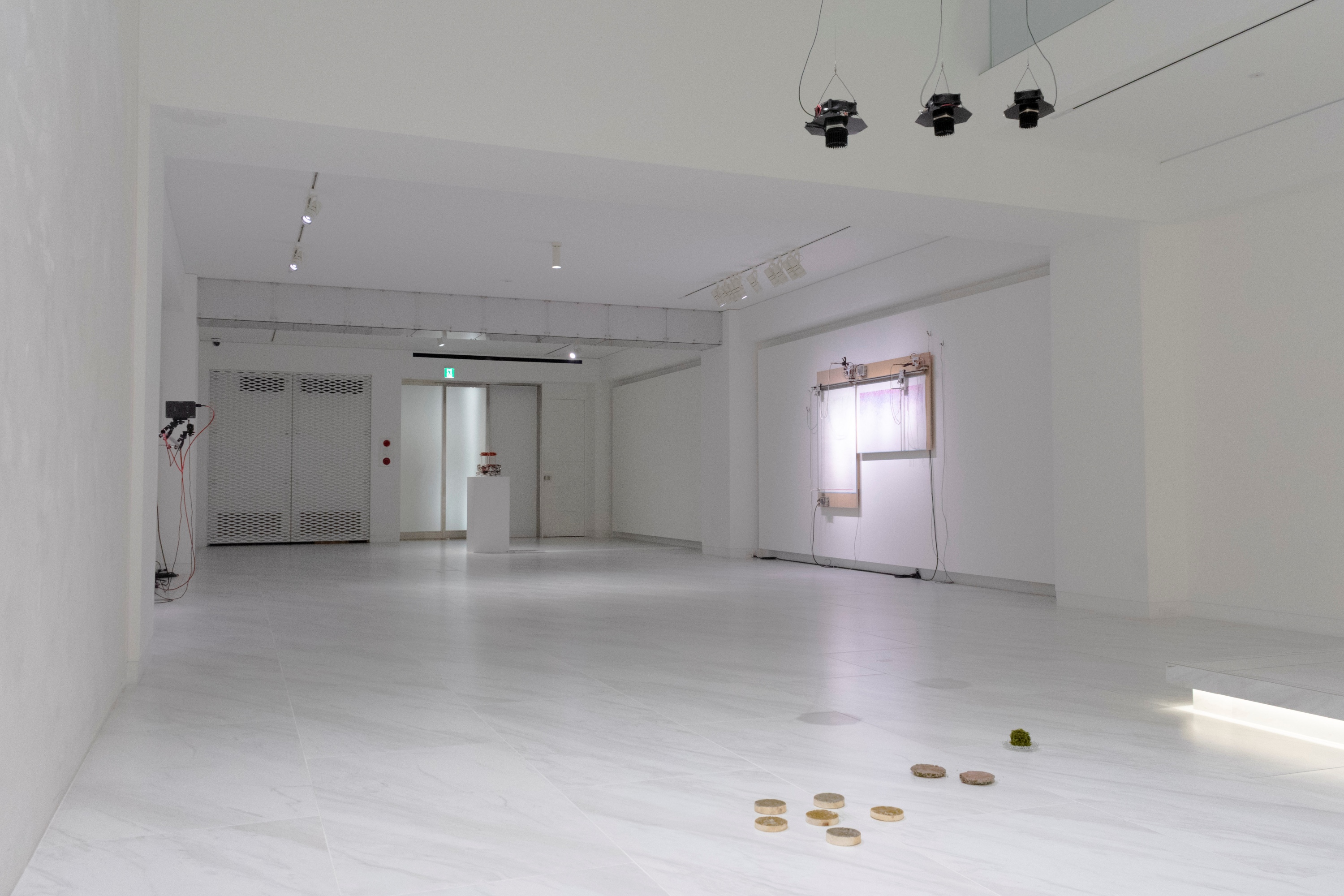
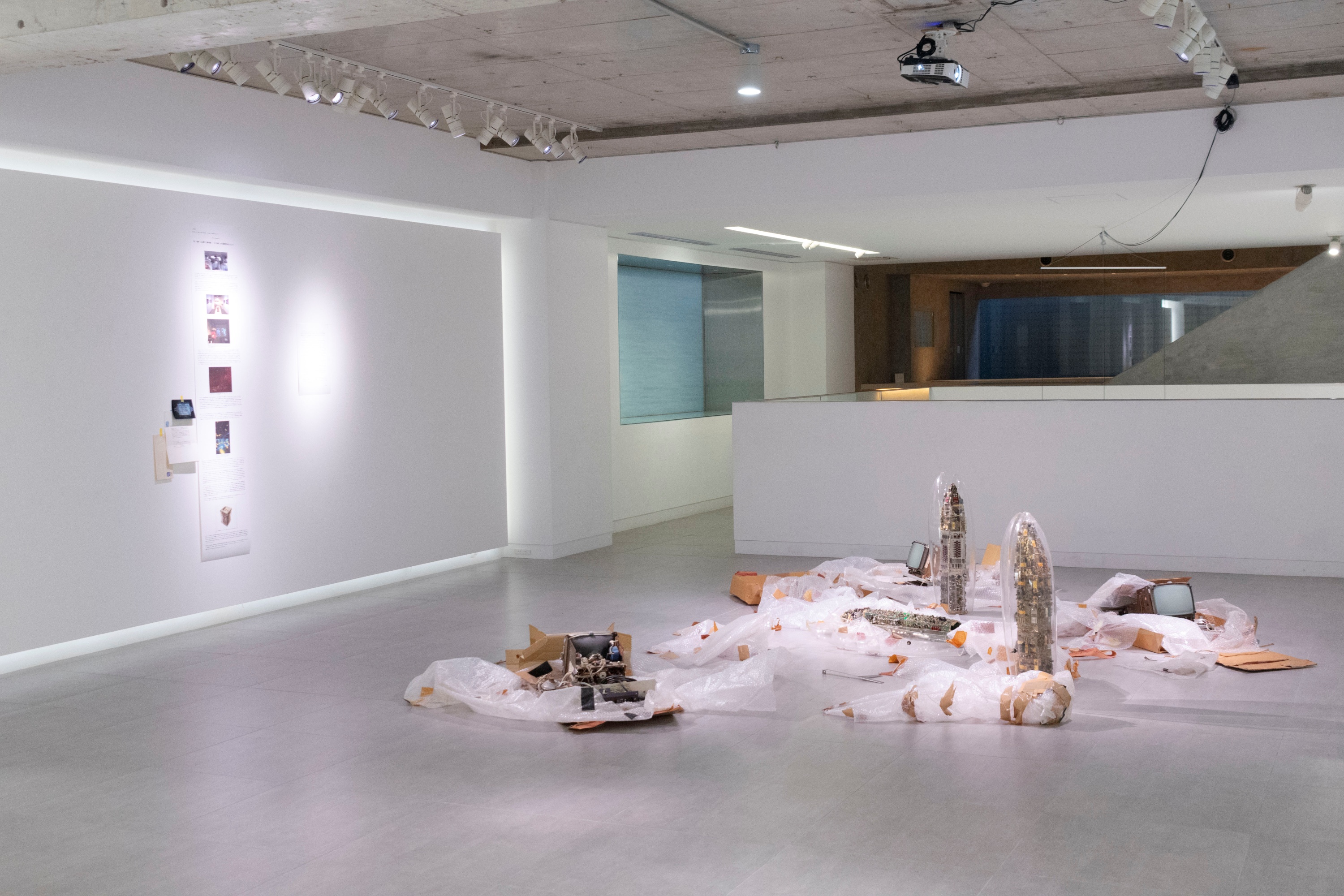
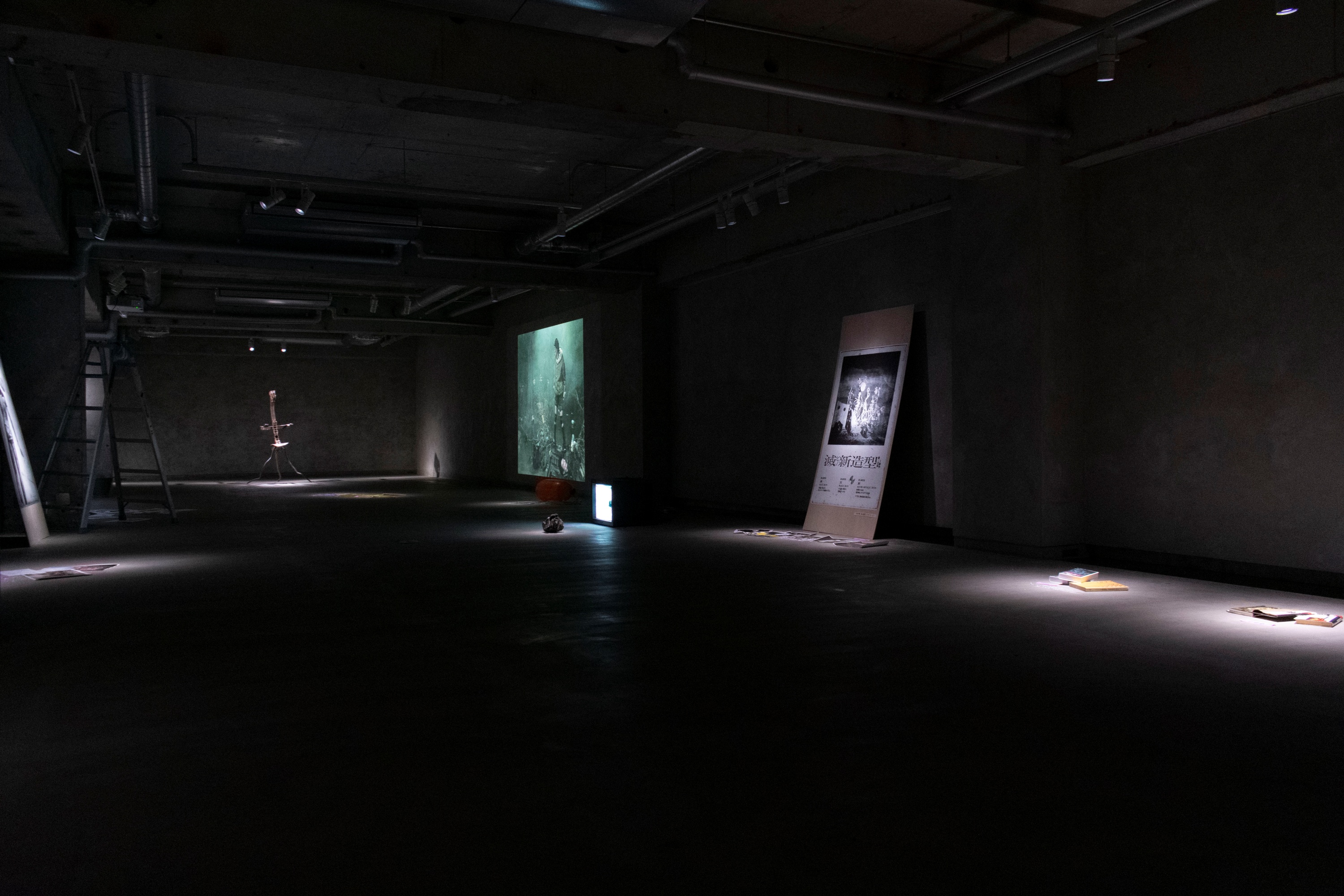
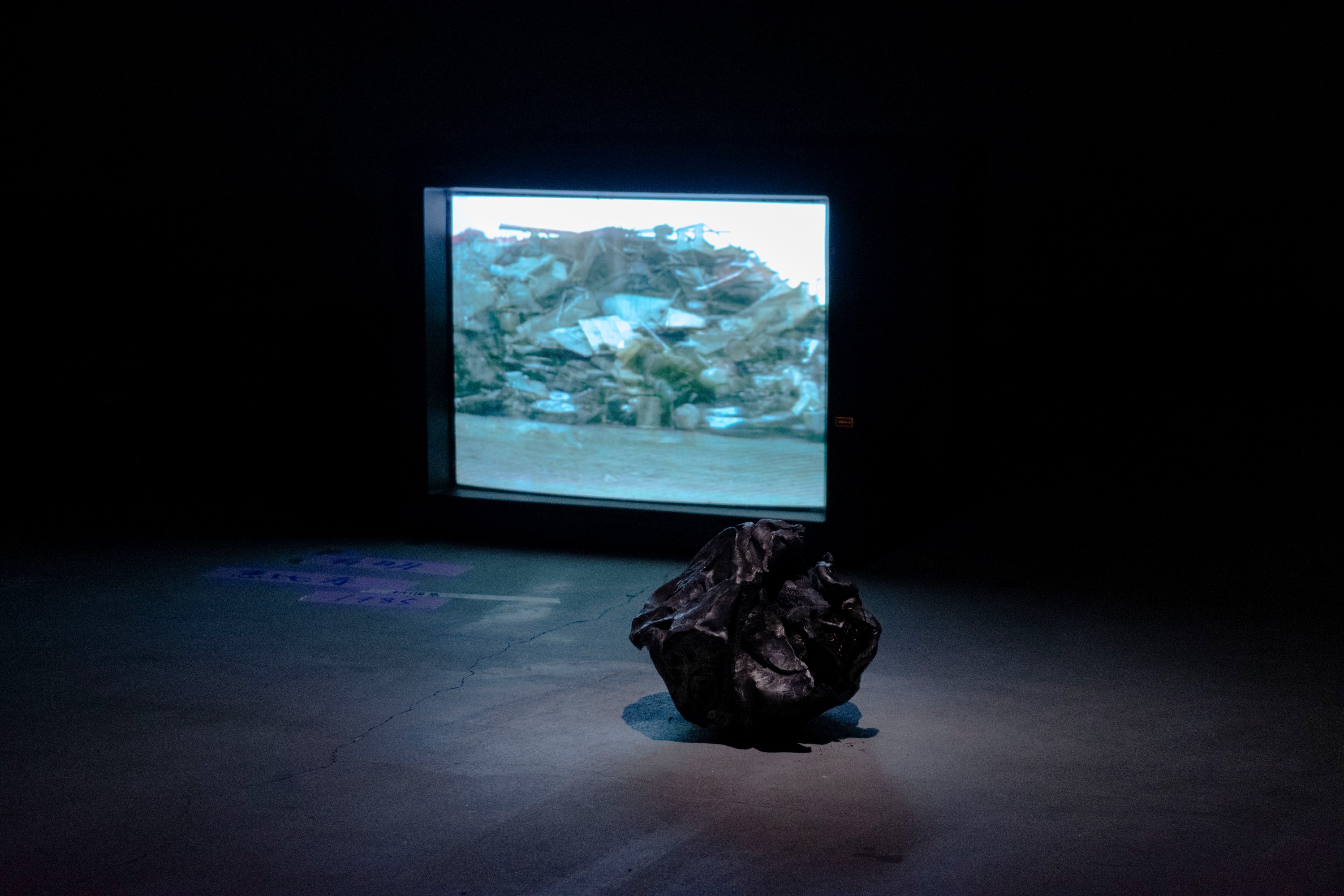
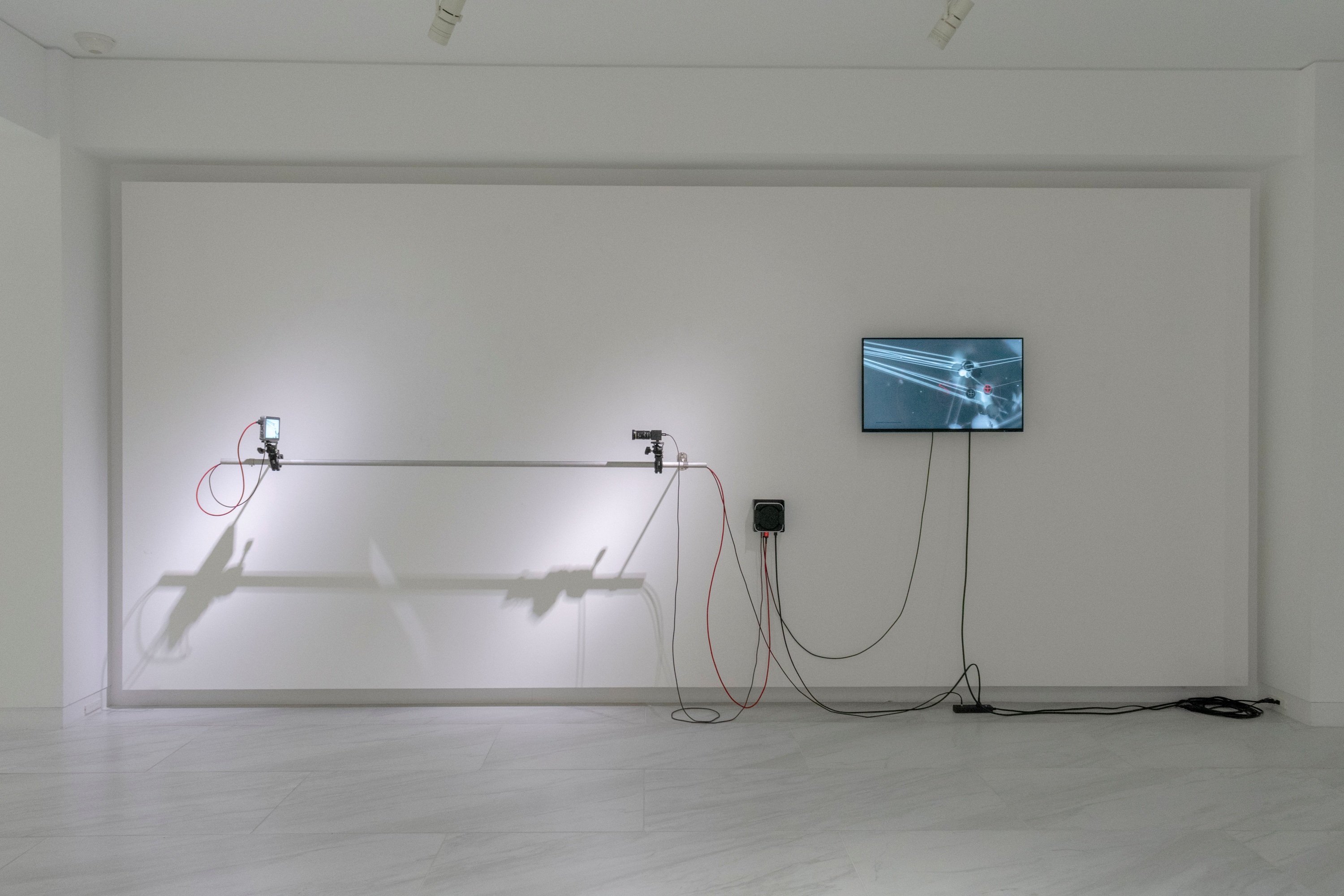
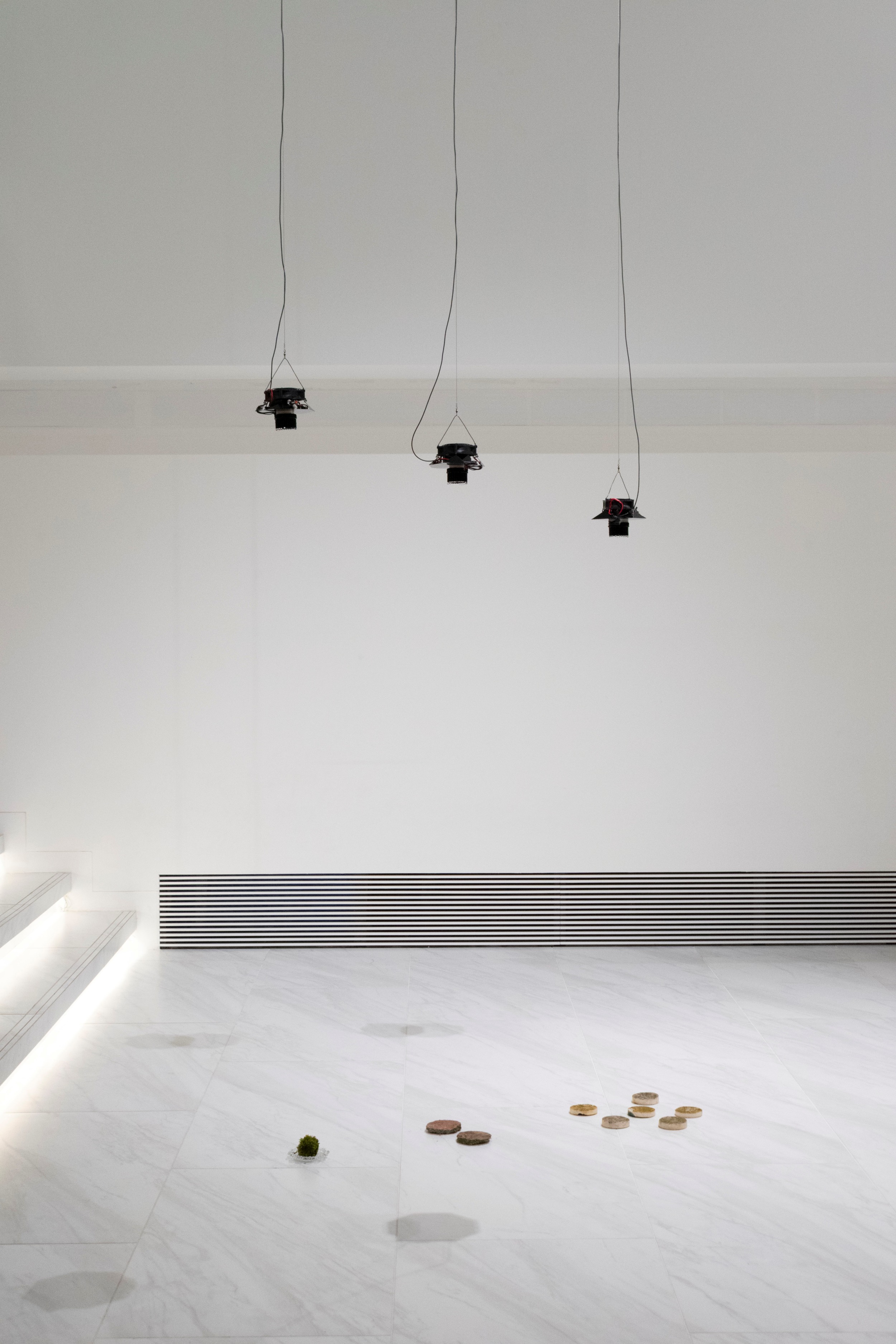
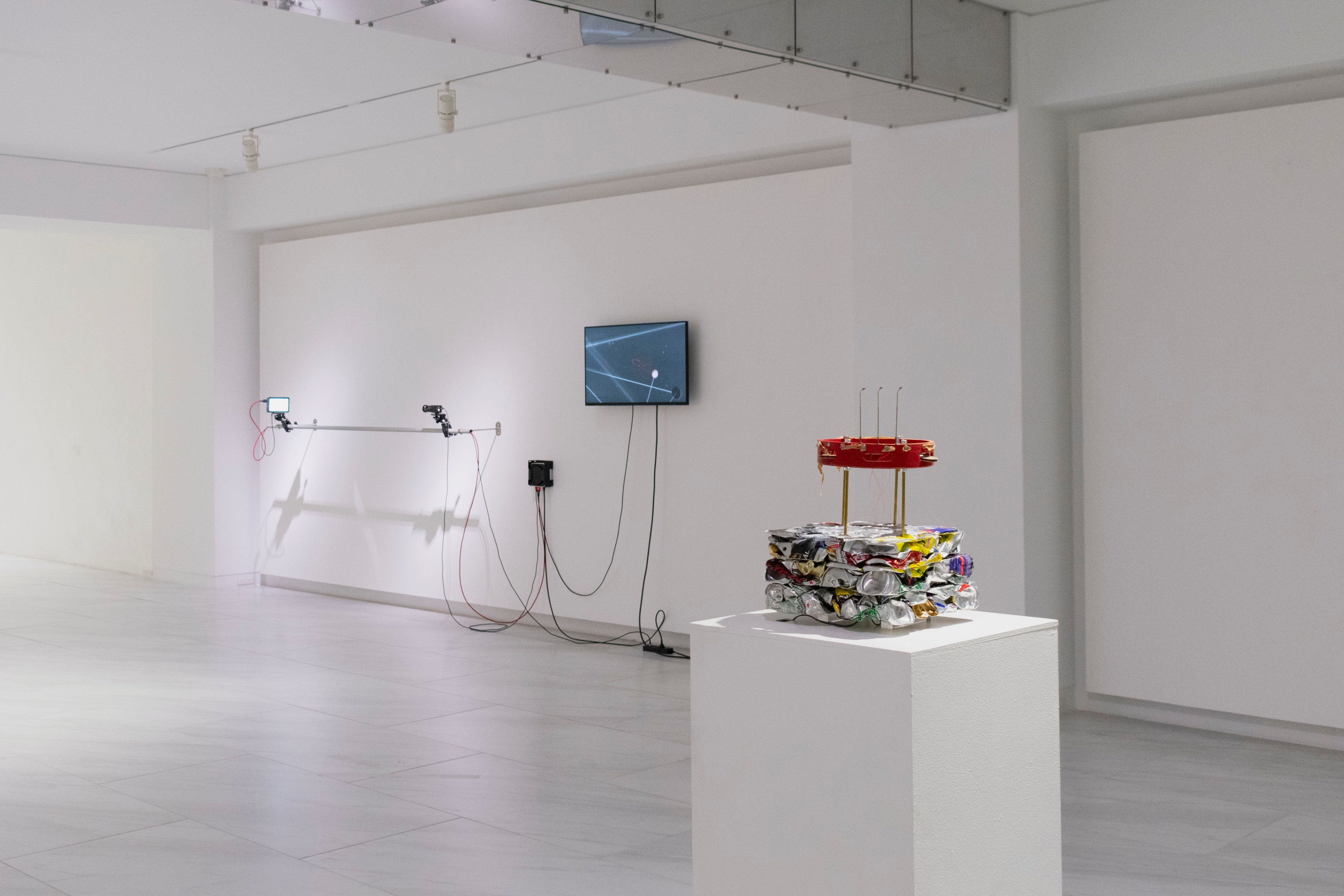
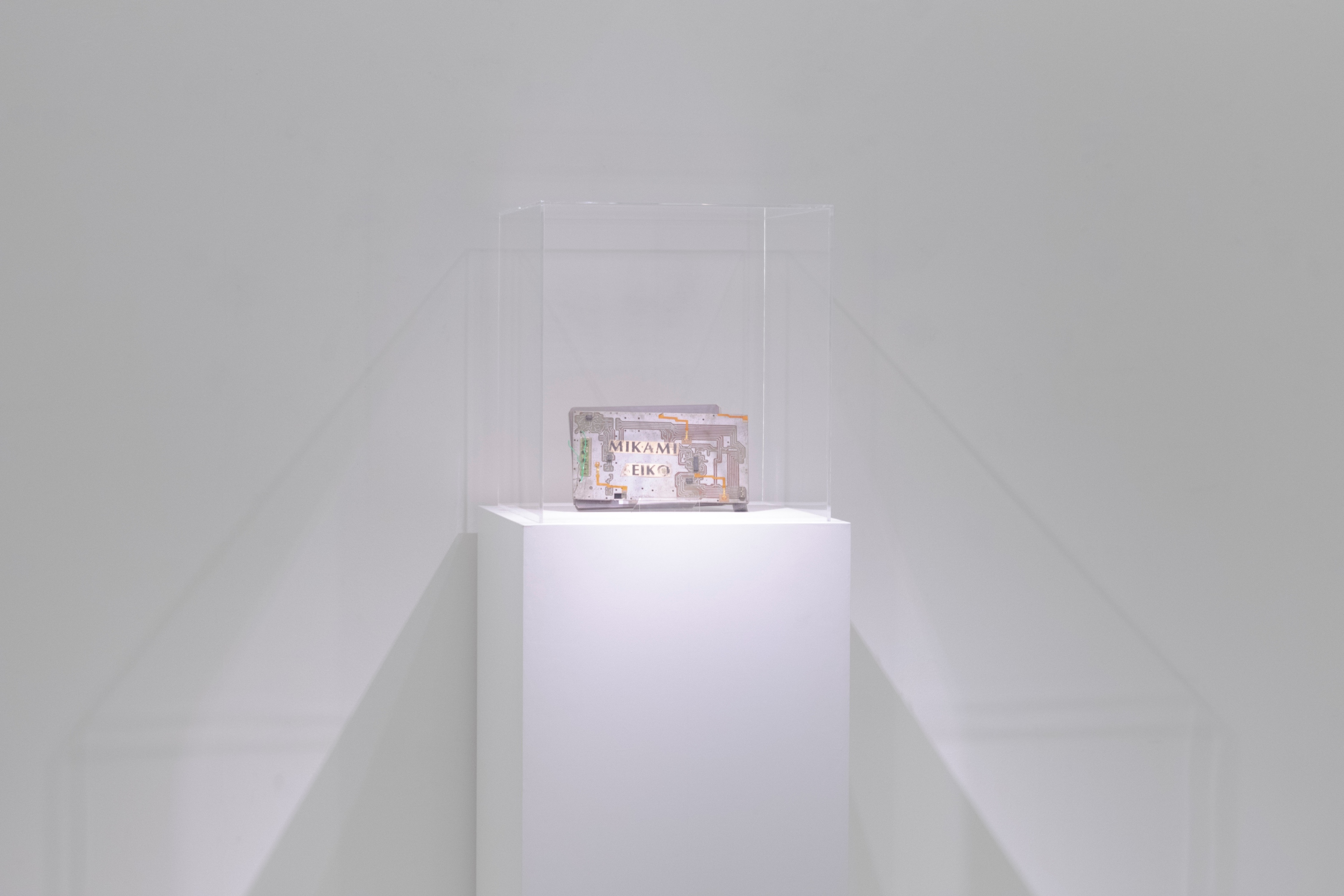
MIKAMI MEME 2025: The Creative Meme of Seiko Mikami – A 10th Anniversary Tribute, Installation View Photo by Mayo Kobayashi
-
MIKAMI MEME 2025: The Creative Meme of Seiko Mikami – A 10th Anniversary Tribute, Installation View Photo by Mayo Kobayashi
-
MIKAMI MEME 2025: The Creative Meme of Seiko Mikami – A 10th Anniversary Tribute, Installation View Photo by Mayo Kobayashi
-
MIKAMI MEME 2025: The Creative Meme of Seiko Mikami – A 10th Anniversary Tribute, Norimizu Ameya Installation View Photo by Mayo Kobayashi
-
MIKAMI MEME 2025: The Creative Meme of Seiko Mikami – A 10th Anniversary Tribute, Norimizu Ameya Installation View Photo by Mayo Kobayashi
-
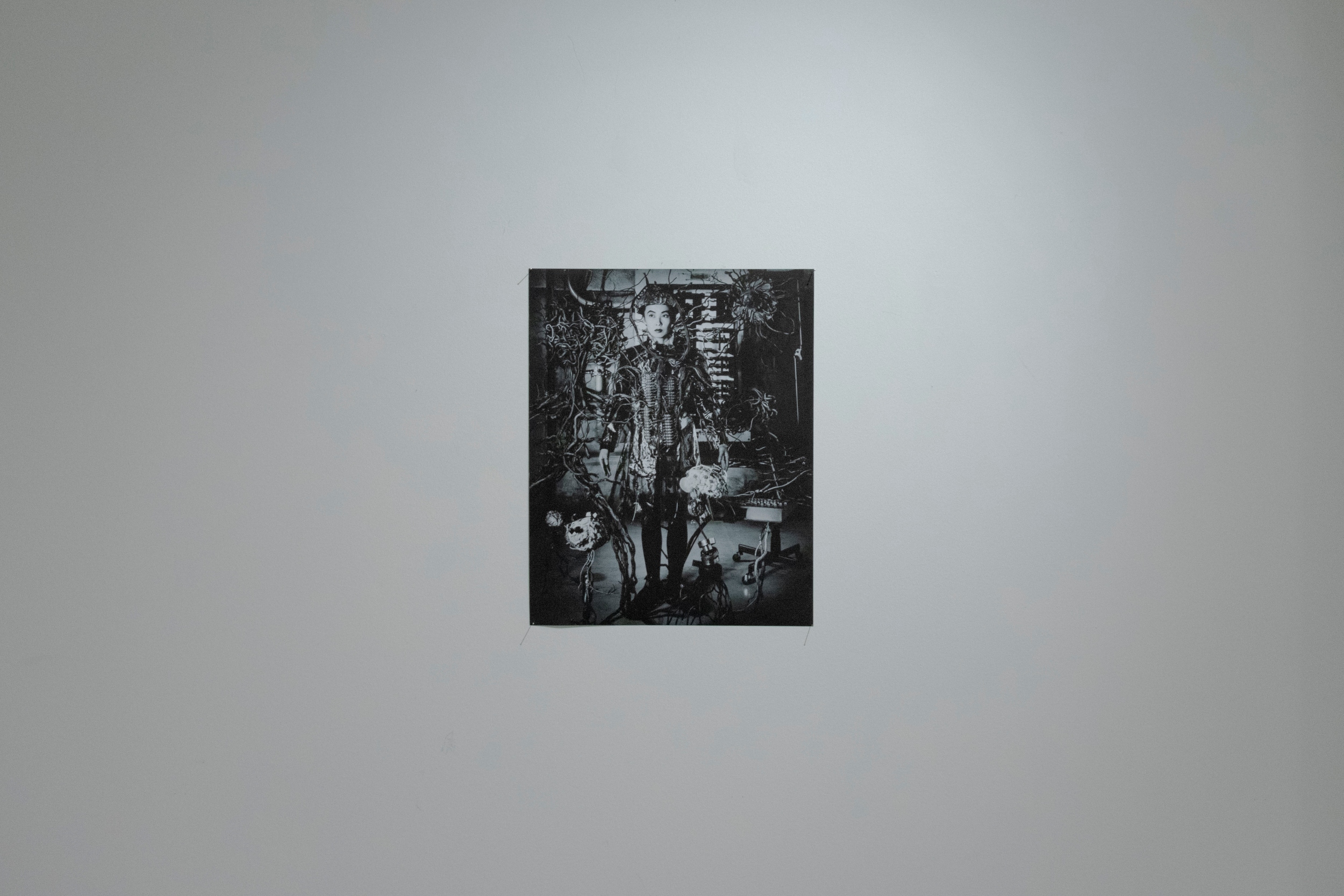
Seiko MIkami Portrait by Kazumi Kurigami, Installation View Photo by Mayo Kobayashi
-
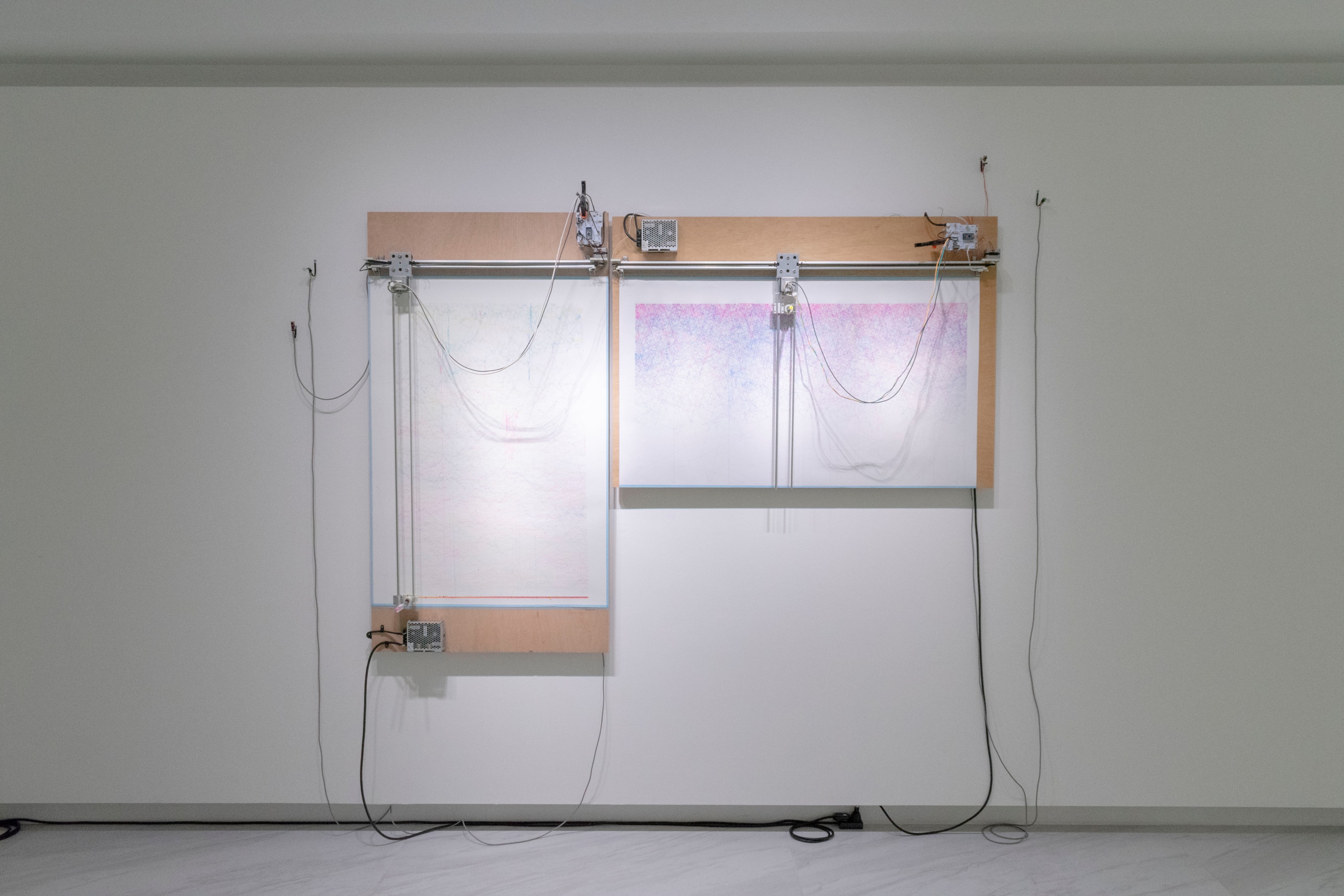
Norimichi Hirakawa《bad process / bad loop [ap-perception / positive feedback]》2025 photo: Mayo Kobayashi
-
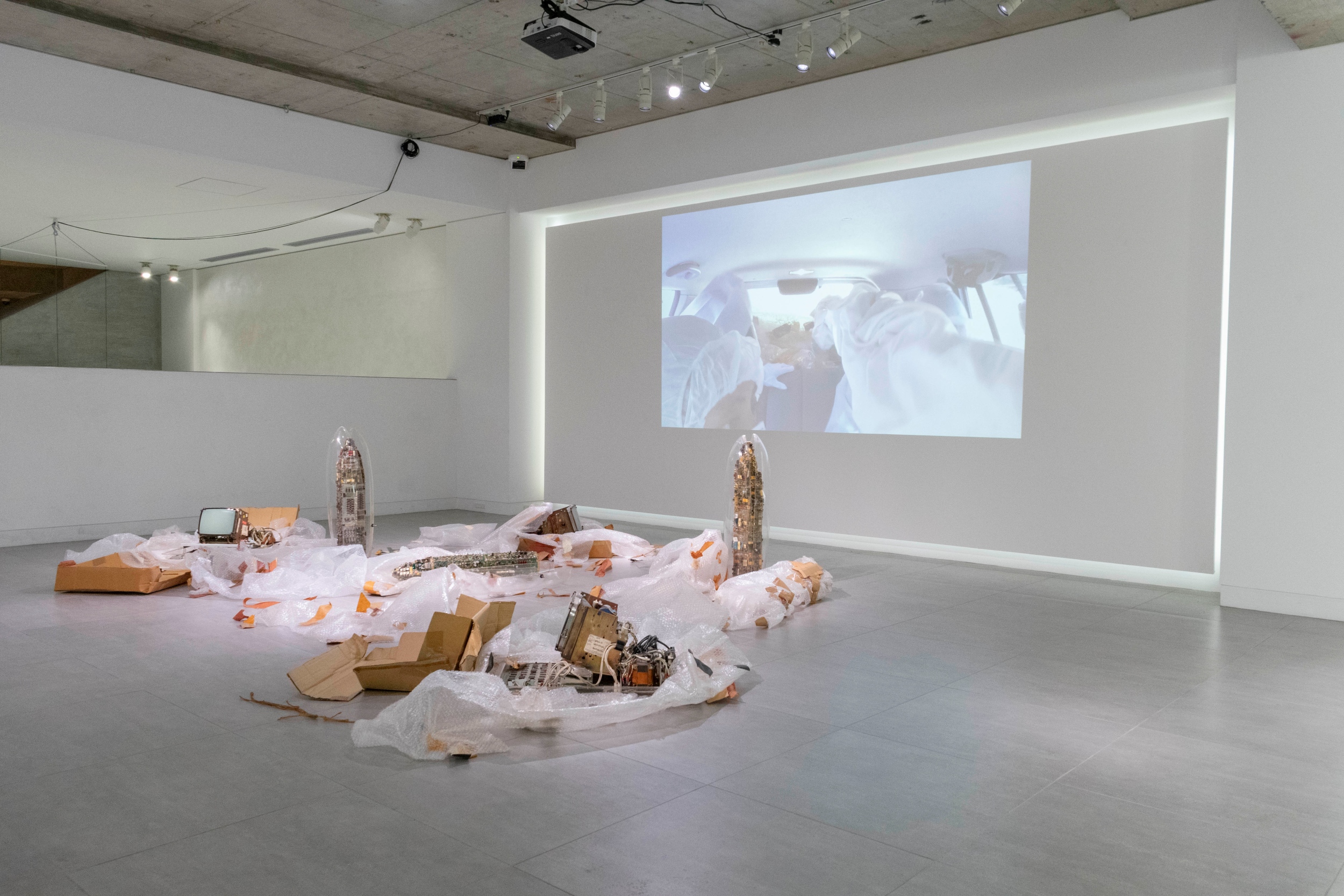
Soichiro Mihara《Res Nullius》 2020,2025 Photo by Keizo Kioku Photo Courtesy: Nissan Art Award
-
Soichiro Mihara《Res Nullius》 2020,2025 Photo by Mayo Kobayashi
-
Yuko Mohri,《Urban Mining: Archipelago #4》 2015 Photo by Tsunemasa Omote Photo Courtesy: Spiral / Wacoal Art Center
-
Yuko Mohri《Urban Mining: Archipelago #4》 2015 Installation view Photo by Mayo Kobayashi
-
Fuyuki Yamakawa from Grand Guignol Mirai《Information Weapon : Salvaged by Grand Guignol Mirai》Installation View Photo by Mayo Kobayashi
-
Yang02《(con)sequences #2》(2025) Photo by Mayo Kobayashi
-
Seiko Mikami《All Hybrid》Insallation View Photo by Mayo Kobayashi
-
Norimizu Ameya (Title to confirm) / 2025 / Reference image: Barrikade (1987). ©︎Hikaru Inose, Atelier Peyotl
ARTISTS

Born in 1961. In 1984, he founded Tokyo Grand Guignol, and subsequently presented experimental theatrical performances under the name M.M.M. In the 1990s, he shifted to contemporary art, presenting works such as the Duch Life series at the Röntgen Kunst Institut under the name Technocrat. In 1995, he opened “Doubutsudo”, a pet shop specializing in rare animals. He resumed his activities with the exhibition “Ba____ng____nt” in 2005. Notable works and projects include Transfer Student (2007), participation in “Festival/Tokyo” (four consecutive times since 2009), the art tour “Irikuchi Dekuchi” (Kunisaki Peninsula Art Festival, 2014), and Blue Sheet (winner of the 58th Kishida Kunio Drama Award, 2013). In addition to performing in theater and collaborating with artists such as Otomo Yoshihide and Fuyuki Yamakawa, he also formed the unit “Grand Guignol Future” with Noi Sawaragi. With Seiko Mikami, he co-produced the exhibition “Organic Room” (Seibu Department Store, Ikebukuro, 1987) and directed the jointly planned Barrikade (Osaki High-Frequency Steelworks site, 1987). The works shown in this exhibition derives from Barrikade, which event is also being held on Monday, November 3 at 2-3pm.
Born in 1961. In 1984, he founded Tokyo Grand Guignol, and subsequently presented experimental theatrical performances under the name M.M.M. In the 1990s, he shifted to contemporary art, presenting works such as the Duch Life series at the Röntgen Kunst Institut under the name Technocrat. In 1995, he opened “Doubutsudo”, a pet shop specializing in rare animals. He resumed his activities with the exhibition “Ba____ng____nt” in 2005. Notable works and projects include Transfer Student (2007), participation in “Festival/Tokyo” (four consecutive times since 2009), the art tour “Irikuchi Dekuchi” (Kunisaki Peninsula Art Festival, 2014), and Blue Sheet (winner of the 58th Kishida Kunio Drama Award, 2013). In addition to performing in theater and collaborating with artists such as Otomo Yoshihide and Fuyuki Yamakawa, he also formed the unit “Grand Guignol Future” with Noi Sawaragi. With Seiko Mikami, he co-produced the exhibition “Organic Room” (Seibu Department Store, Ikebukuro, 1987) and directed the jointly planned Barrikade (Osaki High-Frequency Steelworks site, 1987). The works shown in this exhibition derives from Barrikade, which event is also being held on Monday, November 3 at 2-3pm.
Born in 1982. He uses calculation as the most primitive form of technology, and presents works both in Japan and abroad that deal with subjects beyond the human scale—such as long spans of time or high-dimensional space—through his original mathematical transformations of data collected from nature. He has a strong interest in natural science, exemplified by his residency at the Kavli Institute for the Physics and Mathematics of the Universe in 2015, and a production residency at the ALMA Telescope in the Atacama Desert in 2017. He has participated in the production of works by artists such as Seiko Mikami and Ryoji Ikeda, as well as in the “ARTSAT: Satellite Art Project”. Since relocating to Sapporo in 2019, his activities have expanded further, including involvement in R&D at the former SIAF LAB. He is also interested in non-quantifiable and non-computable subjects—those which cannot be addressed by current science, mathematics, or computers.
Born in 1982. He uses calculation as the most primitive form of technology, and presents works both in Japan and abroad that deal with subjects beyond the human scale—such as long spans of time or high-dimensional space—through his original mathematical transformations of data collected from nature. He has a strong interest in natural science, exemplified by his residency at the Kavli Institute for the Physics and Mathematics of the Universe in 2015, and a production residency at the ALMA Telescope in the Atacama Desert in 2017. He has participated in the production of works by artists such as Seiko Mikami and Ryoji Ikeda, as well as in the “ARTSAT: Satellite Art Project”. Since relocating to Sapporo in 2019, his activities have expanded further, including involvement in R&D at the former SIAF LAB. He is also interested in non-quantifiable and non-computable subjects—those which cannot be addressed by current science, mathematics, or computers.

Artist. He presents systems that are open to the world, attempting to reinterpret materials and phenomena—such as sound, bubbles, radiation, rainbows, microorganisms, moss, air currents, soil, water, and electricity—as “art.” In 2009, while affiliated with the Yamaguchi Center for Arts and Media [YCAM], he served as the technical director for Seiko Mikami’s Desire of Codes. Since then, he has accompanied the work on its tours both in Japan and abroad, and has been involved in its restoration even after Mikami’s passing. Since 2011, he has been developing the Blank Project both domestically and internationally, exploring the relationship between technology and society. From 2022, he has co-organized Let’s Ride the Wave on March 11 in Hirono, Fukushima. In recent years, he has been experimenting with an archival format based on the idea of “Air Art,” organizing his past activities into categories such as vibration, particles, and breath, following a recipe-like format. This approach has been deeply inspired by his collaborations with two pioneers of media art: Felix Hess and Seiko Mikami.
Photo: Kuda Begut Sobaki (2012) At the installation of Mikami’s work “ETI” (Slovenia)
Artist. He presents systems that are open to the world, attempting to reinterpret materials and phenomena—such as sound, bubbles, radiation, rainbows, microorganisms, moss, air currents, soil, water, and electricity—as “art.” In 2009, while affiliated with the Yamaguchi Center for Arts and Media [YCAM], he served as the technical director for Seiko Mikami’s Desire of Codes. Since then, he has accompanied the work on its tours both in Japan and abroad, and has been involved in its restoration even after Mikami’s passing. Since 2011, he has been developing the Blank Project both domestically and internationally, exploring the relationship between technology and society. From 2022, he has co-organized Let’s Ride the Wave on March 11 in Hirono, Fukushima. In recent years, he has been experimenting with an archival format based on the idea of “Air Art,” organizing his past activities into categories such as vibration, particles, and breath, following a recipe-like format. This approach has been deeply inspired by his collaborations with two pioneers of media art: Felix Hess and Seiko Mikami.
Photo: Kuda Begut Sobaki (2012) At the installation of Mikami’s work “ETI” (Slovenia)

Artist. Rather than taking an approach focused on construction, creates installations and sculptures that focus on “events” that change according to various conditions such as the environment. Major recent exhibitions include “Entanglements” (Pirelli HangarBicocca, Milan, 2025 – 2026), Tour Exhibition Centro Botín (Santander、2026)、「“Jam Session: The Ishibashi Foundation Collection × MOHRI Yuko – On Physis” (Artizon Museum, Tokyo, 2024–2025), the Japan Pavilion at the 60th Venice Biennale “Compose” (Italy, 2024), solo exhibitions at Camden Arts Centre (London, 2018), and Towada Art Center (Aomori, 2018–2019). She has also participated in domestic and international exhibitions such as The 14th Gwangju Biennale (2023), the 23rd Biennale of Sydney (2022), Asia Art Biennial 2021 (Taichung), the 34th São Paulo Biennial (2021), Glasgow International 2021, and so on.
Photo: Kuge Yasuhide
Artist. Rather than taking an approach focused on construction, creates installations and sculptures that focus on “events” that change according to various conditions such as the environment. Major recent exhibitions include “Entanglements” (Pirelli HangarBicocca, Milan, 2025 – 2026), Tour Exhibition Centro Botín (Santander、2026)、「“Jam Session: The Ishibashi Foundation Collection × MOHRI Yuko – On Physis” (Artizon Museum, Tokyo, 2024–2025), the Japan Pavilion at the 60th Venice Biennale “Compose” (Italy, 2024), solo exhibitions at Camden Arts Centre (London, 2018), and Towada Art Center (Aomori, 2018–2019). She has also participated in domestic and international exhibitions such as The 14th Gwangju Biennale (2023), the 23rd Biennale of Sydney (2022), Asia Art Biennial 2021 (Taichung), the 34th São Paulo Biennial (2021), Glasgow International 2021, and so on.
Photo: Kuge Yasuhide

Using his own voice and body as mediums, he creates expressions that engage the senses of sight, hearing, and touch, and works across the boundaries of music, contemporary art, and performing arts. He has performed in 16 countries, presenting performances that expand his biological activities and physical actions through technology, as well as voice performances that make use of khoomei, a traditional form of throat singing from southern Siberia. In the field of contemporary art, he has presented works such as The Voice-over (1997–2008 / in the collection of the Museum of Contemporary Art Tokyo) and “Pa” nish-ment (2011–ongoing).
He also engages in long-term projects involving historical and social contexts, such as work in the Difficult-to-Return Zone (as a member of the exhibition “Don’t Follow The Wind”) and in a leprosy sanatorium (Setouchi Triennale / Oshima Seishoen). In 2015, he received the Yokohama Culture Award for Art and Culture Encouragement. An associate professor of Akita University of Arts since 2023.
For this exhibition, he is participating under the name “Fuyuki Yamakawa from Grand Guignol Mirai.”
Using his own voice and body as mediums, he creates expressions that engage the senses of sight, hearing, and touch, and works across the boundaries of music, contemporary art, and performing arts. He has performed in 16 countries, presenting performances that expand his biological activities and physical actions through technology, as well as voice performances that make use of khoomei, a traditional form of throat singing from southern Siberia. In the field of contemporary art, he has presented works such as The Voice-over (1997–2008 / in the collection of the Museum of Contemporary Art Tokyo) and “Pa” nish-ment (2011–ongoing).
He also engages in long-term projects involving historical and social contexts, such as work in the Difficult-to-Return Zone (as a member of the exhibition “Don’t Follow The Wind”) and in a leprosy sanatorium (Setouchi Triennale / Oshima Seishoen). In 2015, he received the Yokohama Culture Award for Art and Culture Encouragement. An associate professor of Akita University of Arts since 2023.
For this exhibition, he is participating under the name “Fuyuki Yamakawa from Grand Guignol Mirai.”

Born in Kanagawa Prefecture in 1984. Presents artworks in the forms of two-dimensional and three-dimensional pieces, installations, and performances by misusing, repurposing, or hacking existing electronic appliances, information systems, and discarded items. Received the Excellence Award in the Art Division at the 21st Japan Media Arts Festival (2018). Finalist of the TERRADA ART AWARD 2023, awarded the Yuki Terase Prize. Major recent exhibitions include “MOT Annual 2023” (Museum of Contemporary Art Tokyo, Tokyo, 2023), “Roppongi Crossing 2022: Coming & Going” (Mori Art Museum, Tokyo, 2022), 20th DOMANI: “The Art of Tomorrow” (The National Art Center, Tokyo, 2018), and Aichi Triennale 2016 (Aichi Art Center), among others.
Born in Kanagawa Prefecture in 1984. Presents artworks in the forms of two-dimensional and three-dimensional pieces, installations, and performances by misusing, repurposing, or hacking existing electronic appliances, information systems, and discarded items. Received the Excellence Award in the Art Division at the 21st Japan Media Arts Festival (2018). Finalist of the TERRADA ART AWARD 2023, awarded the Yuki Terase Prize. Major recent exhibitions include “MOT Annual 2023” (Museum of Contemporary Art Tokyo, Tokyo, 2023), “Roppongi Crossing 2022: Coming & Going” (Mori Art Museum, Tokyo, 2022), 20th DOMANI: “The Art of Tomorrow” (The National Art Center, Tokyo, 2018), and Aichi Triennale 2016 (Aichi Art Center), among others.