








A talk event featuring Reiko Tsubaki (Curator, Mori Art Museum; Concurrently serving at TOKYO NODE) and Emi Kusano will be held from 6:00 PM on Friday, May 22.
Admission is free and advance reservation is required.
To participate, please contact: info@root-k.jp
▶ Guest | Reiko Tsubaki
(Curator, Mori Art Museum; Concurrently serving at TOKYO NODE)
Tsubaki has been affiliated with the Mori Art Museum since 2002 and, as of August 2025, concurrently serves at TOKYO NODE.
At the Mori Art Museum, she has curated Medicine and Art (2010); Universe and Art (2016), which toured to the ArtScience Museum, Singapore, in 2017; Leandro Erlich (2017); Roppongi Crossing 2019 (2019); STARS (2020); Our Ecology (2023); Louise Bourgeois (2024–2025), and The Architecture of Sou Fujimoto (2025).
She has also organized focused presentations featuring artists such as Ho Tzu Nyen, Tala Madani, Camille Henrot, Fuyuhiko Takata, Cyprien Gaillard, Cao Fei, and Shota Yamauchi. In addition, she curated MAM Research 006: Chronicle Kyoto 1990s and MAM Research 011: Tokyo Underground.
She is currently preparing Tony Oursler: Between Technology and Spirituality—Magic, Media, and Art, scheduled to open in July at TOKYO NODE (3 July-27 September 2026).
Outside the museum, she is also active in independent curatorial projects, writing, lectures, and serving as a juror.
Emi Kusano「Ornament Survival」
Dates | Saturday, May 16 – Saturday, June 20, 2026
Organized by | √K Contemporary
Supported by | Tsubasa Koshide, Matsui Manufacturing Company, Tomoya Kishimoto, Kensho Tambara, Eriko Kimura
Printing | FLATLABO
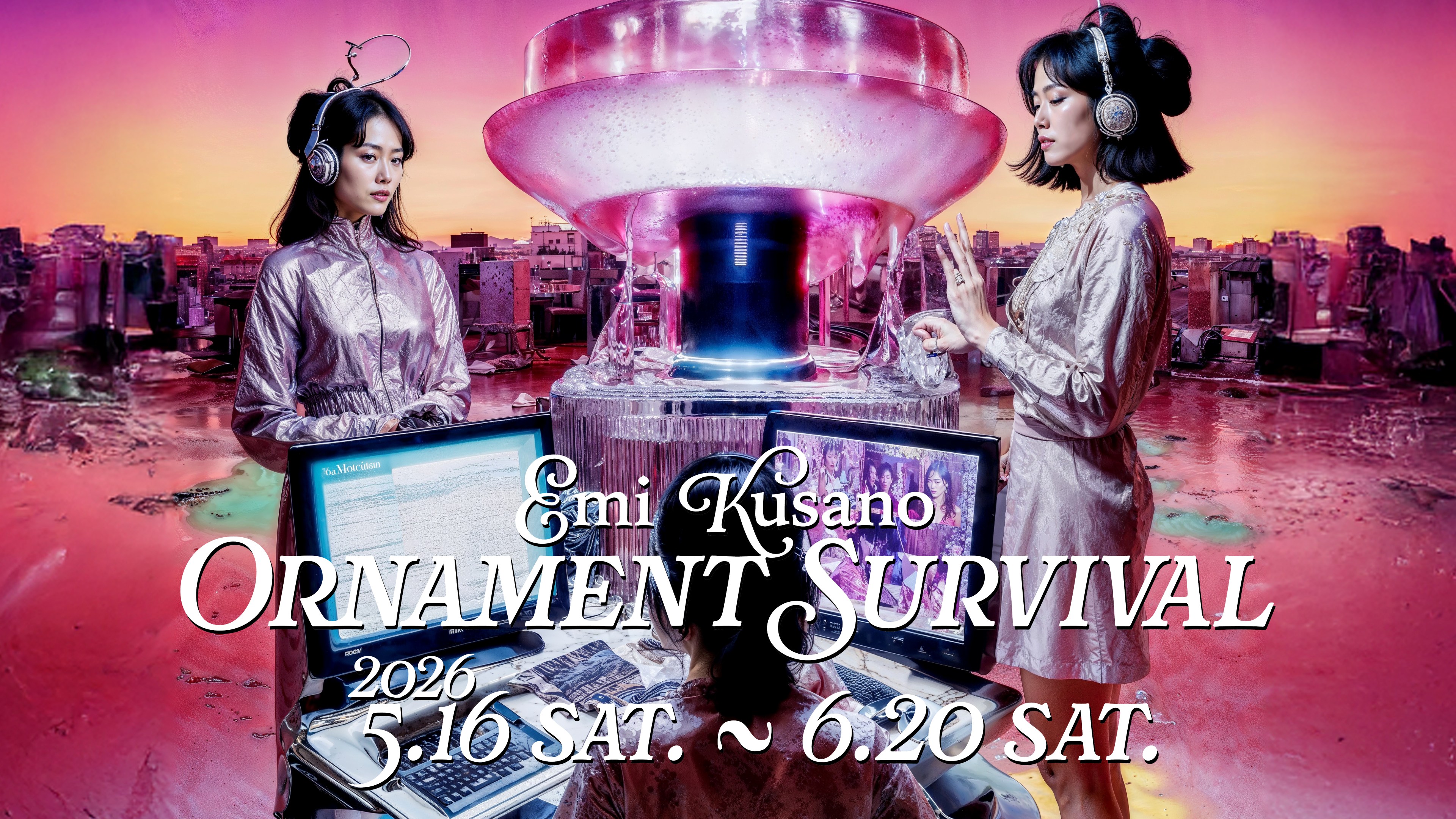
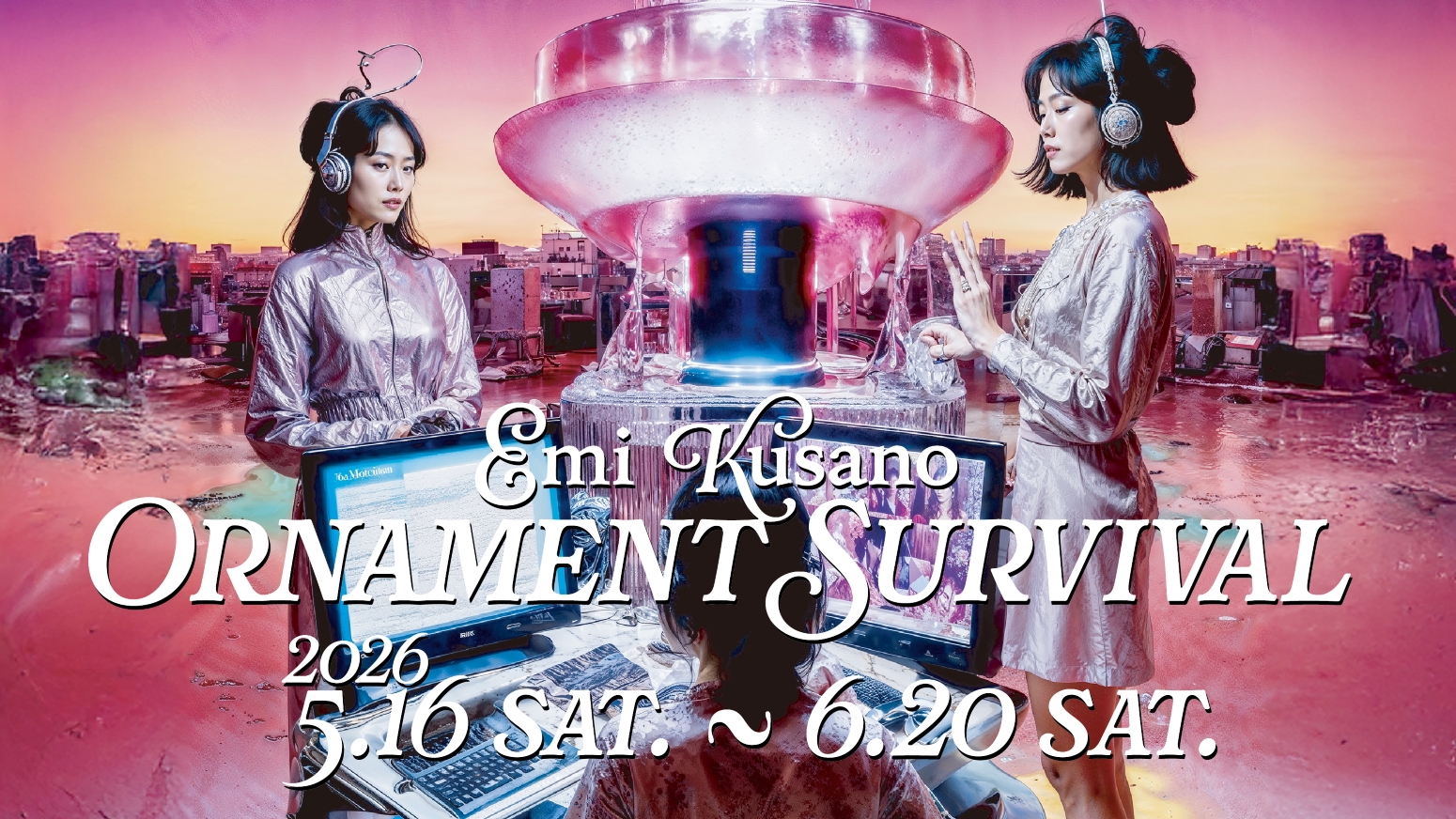
√K Contemporary is pleased to present Ornament Survival, a solo exhibition by artist Emi Kusano, on view from Saturday, May 16 through Saturday, June 20, 2026.
This exhibition marks the Japan debut of Kusano’s new series Ornament Survival, first unveiled to critical acclaim at Art Basel Hong Kong’s digital art sector, Zero10, in March 2026. Alongside new works that further develop the series, the exhibition also features signature pieces such as Office Ladies, offering an opportunity to trace the evolution of Kusano’s practice.
Kusano is a leading figure among a new generation of international digital artists, having established a distinctive position in the field. Long before AI-based expression became widespread, she was creating works using a customized AI model trained on her own imagery, presenting them at major institutions in Japan and abroad, including M+ and the 21st Century Museum of Contemporary Art, Kanazawa. Since the early emergence of NFTs as a new mode of circulation and reception for digital art, she has continued to produce and release work, and in recent years has expanded her practice beyond that framework to explore expressions that traverse the boundary between the physical and the digital. At Art Basel Hong Kong 2026’s Zero10 sector, she presented her first sculptural work, further demonstrating the breadth of her practice.
Ornament Survival now makes its Japan debut.
In an age in which individuals are swept up in accelerating flows of information, the desire for recognition—both self-directed and from others—continues to proliferate without ever being fulfilled, becoming a resource within an information-capitalist society. Emotions are reduced to their surfaces, extracted as data, and ultimately replaced by technology, blurring even the contours of our existence. Today, as the nostalgia Kusano once felt for the Japanese culture of the 1980s and 1990s is itself consumed and reconfigured, the boundary between reality and fiction grows increasingly unstable.
In this series, Kusano transforms inner anguish and desire into creative energy. Positioning this as a model for women living in the present, she intertwines it with her own childhood longing for transformation, continuing to “survive = create” in order to construct a new realm of expression.
We invite you to experience a new phase in Emi Kusano’s practice.
■ Comment by Kensho Tambara (Curator)
The figures that recur in Kusano’s work; 80s Japanese pop idols, mahou-shoujo magical girls, nurses, receptionists, and other stylized feminine archetypes, did more than populate the visual culture of their time. For many girls growing up in Japan in the 1990s, they offered recognizable models through which transformation, visibility, and agency could be imagined. Yet their appeal was inseparable from highly coded forms of femininity within a male-dominated, post-bubble Japan, carrying expectations around appearance, desirability, and behavior. Amidst a growing trend in popular anime toward female protagonists who transform, or henshin (変身), as in franchises like Sailor Moon, these images held out the possibility that girls, too, could become something else. Even so, that possibility remained bound to familiar norms governing how femininity should appear and behave.
In her new series, Ornament Survival, Kusano approaches this tension from within. She has spoken of how she admired these images growing up, while also recognizing how they were shaped by gendered expectations and the male gaze. This dual position underpins the work. The figures she returns to are part of a visual environment that informed her sense of self, shaping how transformation, femininity, and agency were first encountered as lived experience.
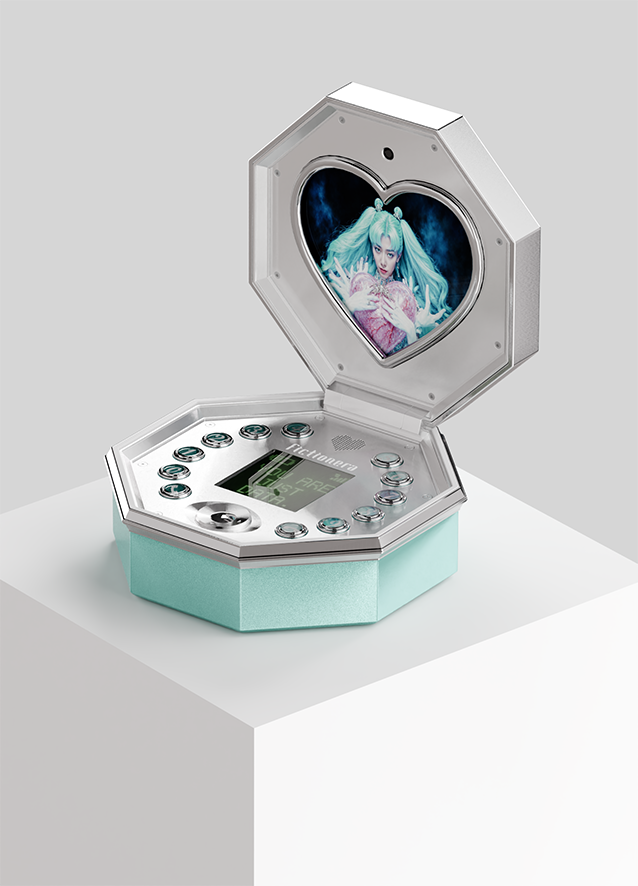
Rather than resolving this tension, Kusano re-enters these images. Drawing on childhood play; dressing dolls, assigning roles, and staging scenes, she treats identity as something assembled through rehearsal rather than something fixed. At the center of Ornament Survival is a body of AI-generated images in which she uses her own image to stage speculative selves. These images unfold as a sequence of attempts, each adjusting familiar roles through shifts in styling, posture, and context. What emerges is not a set of parallel what-if universes, but a continuous recomposition of culturally learned roles. The central sculpture taking the form of an enlarged toy makeup compact, echoes the transformation devices from magical girl culture and reinforces this element of childhood play.
In Kusano’s hands, the use of generative AI continues a lifelong process through which identity is formed in relation to existing images. At the same time, her use of a model trained on her own face and body marks a decisive shift: the self is rendered into a form that can be repeated, modified, and scaled, approaching what she describes as a “standard” within a system. What is rehearsed here is not only identity, but its conversion into data. By engaging how these forms persist through repetition, Kusano opens onto a broader question: how images continue to instruct the self as they circulate with unprecedented speed and intimacy, and how identity is continuously adjusted to remain visible and legible, where appearance becomes a site of negotiation, and where performing these forms begins to resemble a means of survival.
—————————–
Kensho TAMBARA (b. 1992, Tokyo) is a performance artist and curator interested in investigating the role of contemporary rites and symbolic gestures in interpersonal relationships and societies. Having studied art history at Harvard University, Kensho returned to Tokyo to do-found various art spaces in Japan such as Shinokubo UGO and Sonoaida #Shin-Yurakucho. Kensho is also an advisor to a number of prolific art collectors. Past exhibitions include Future and the Arts (2020, Mori Art Museum as collective Another Farm), Dream Play Sequence (2021, within Toyama Prefectural Museum of Art and Design), Debugging Landscapes (2022, ANB Tokyo) and Unmanned Arc (2023, Osaka Kansai International Art Festival, Osaka).
■ Events
A series of talk events is planned during the exhibition, exploring Kusano’s creative background and thought, including themes such as AI and art that are drawing widespread attention today.
Please see below EVENTS for details.
Note: All events will be held in Japanese.
IMAGES
-
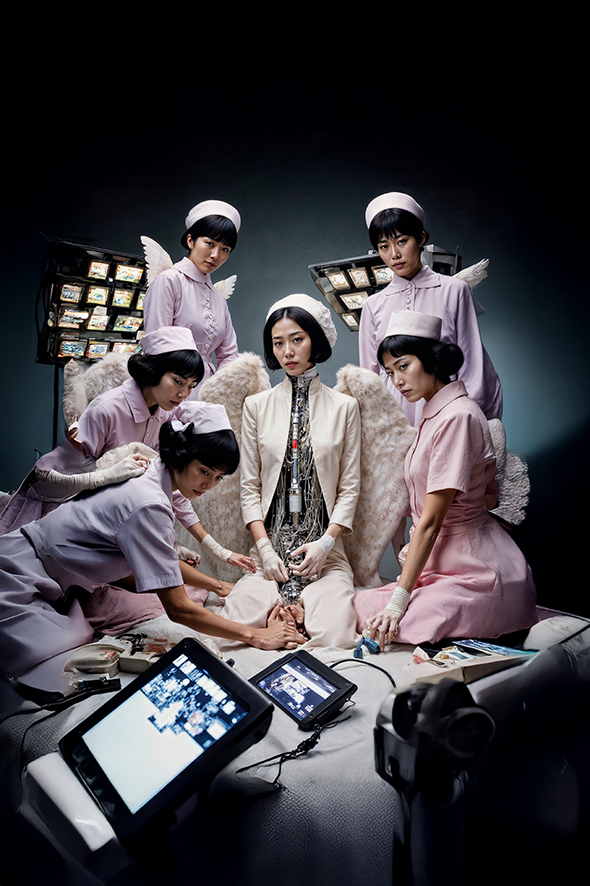
《Magical Compact 02: Aqua Halo》(2026) Plastic, AI-Photography printed on acrylic
-
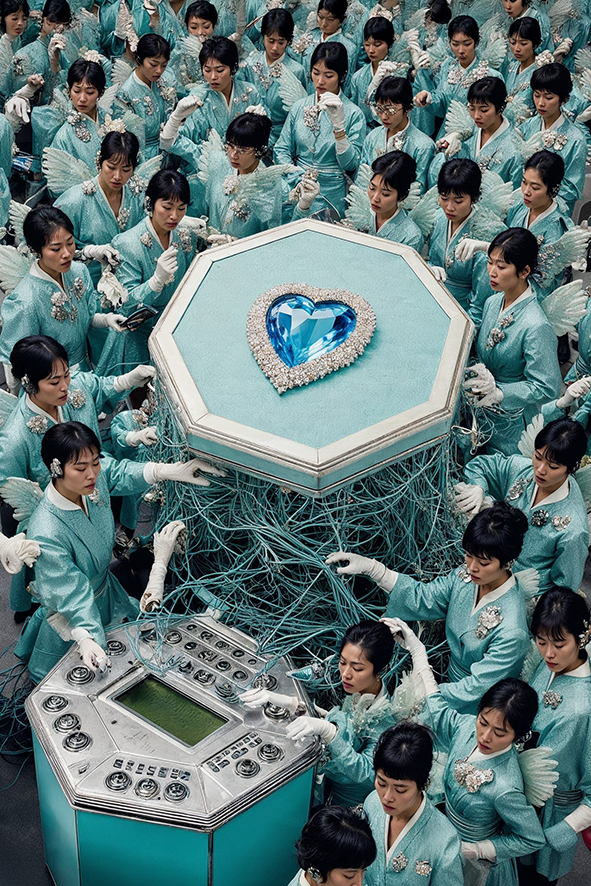
《Blue Core Assembly》(2026) Print on acrylic board, 145.6×103cm
-
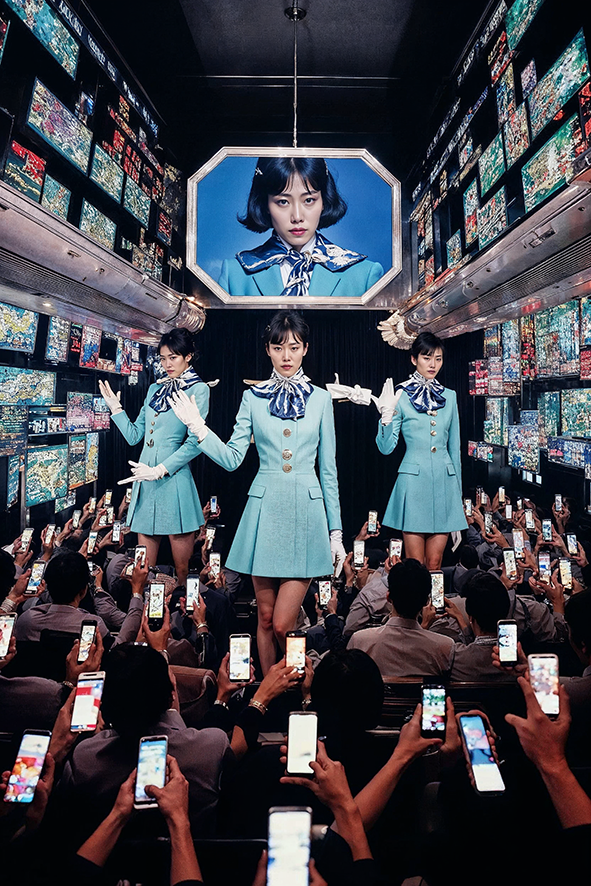
《Model Audience》(2026) Print on acrylic board, 119×84cm
-
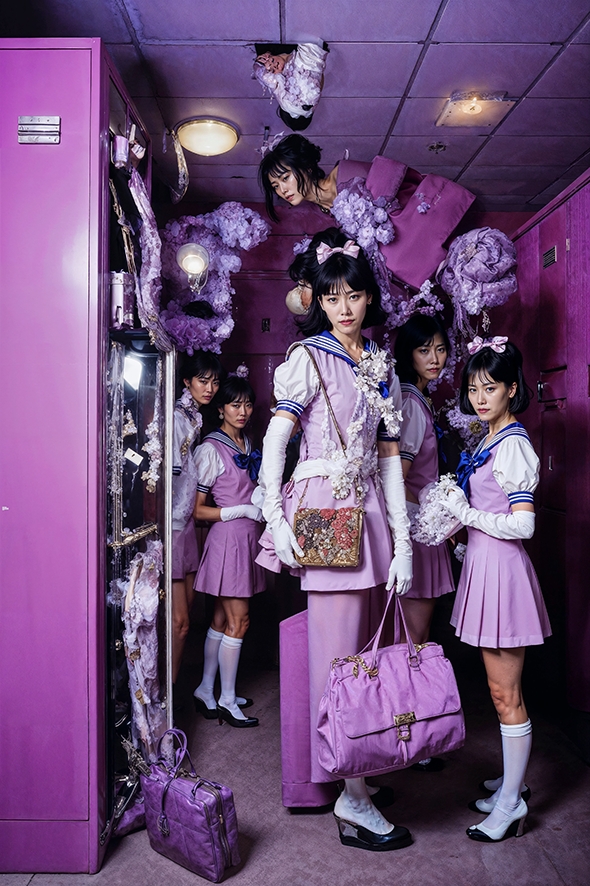
《Transit Bouquet》(2026) Print on acrylic board, 84 × 59 cm
-
《Nursing the Machine》(2026) Print on acrylic board, AP,119×84cm
ARTISTS
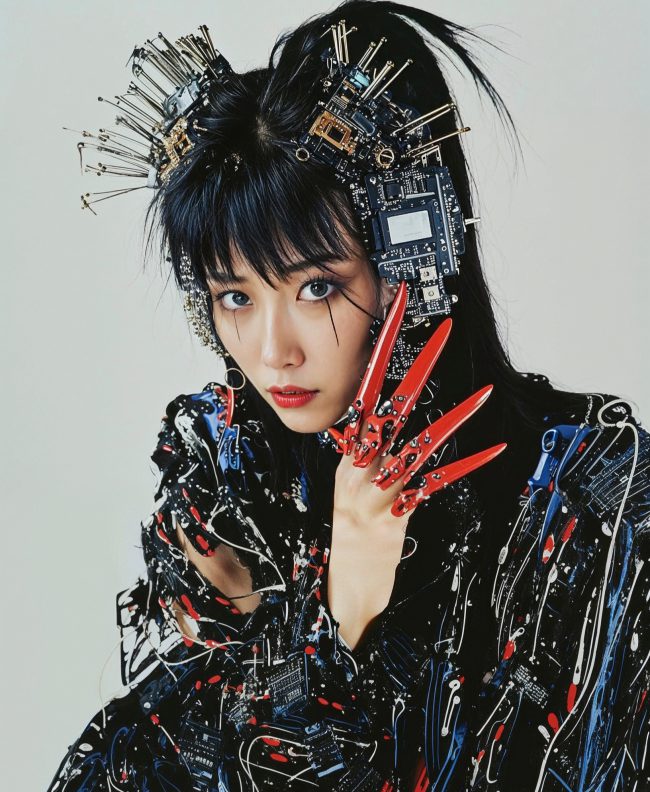
Emi Kusano (b. 1990, Tokyo) is a multidisciplinary artist and a leading figure in the global Generative AI art scene. She began her career as a teenage street photographer documenting Harajuku fashion, with early works featured at the Victoria and Albert Museum. These early experiences in fashion and photography informed her vision of how mass media shapes individual and collective identities.
Since then, her practice has evolved to integrate emerging technologies—positioning AI as a collaborative partner rather than a defining element. Through this process, she critically explores nostalgia, pop culture, and collective memory in the digital age.
Her work has been exhibited internationally in over 20 countries at major institutions including M+ Museum (Hong Kong), Saatchi Gallery (London), Grand Palais Immersif (Paris), Museum Francisco Carolinum (Linz), and the 21st Century Museum of Contemporary Art, Kanazawa. She has also participated in major international art fairs such as Frieze and Untitled Art Miami. Notably, her acclaimed series Office Ladies was featured at Paris Photo, garnering global attention for its unique fusion of photographic sensibilities and AI generation.
Kusano’s market presence continues to rise, highlighted by her participation in a Gucci-Christie’s auction in 2023 and a charity auction by Christie’s and UNHCR in 2024. Beyond visual art, she is the founder and lead singer of the music group Satellite Young, reinterpreting 1980s J-POP through a contemporary sci-fi lens at global events like SXSW. In 2025, she was recognized as a Young Global Leader by the World Economic Forum.
Most recently, Kusano held her first New York solo exhibition, Ego in the Shell, a collaboration with cyber punk anime series Ghost in the Shell, which received strong critical acclaim. She was the sole Japanese artist selected for the digital art section, Zero10, at Art Basel Hong Kong 2026, where her work attracted significant attention.
IG : @emiksn | X : @emikusano
Emi Kusano (b. 1990, Tokyo) is a multidisciplinary artist and a leading figure in the global Generative AI art scene. She began her career as a teenage street photographer documenting Harajuku fashion, with early works featured at the Victoria and Albert Museum. These early experiences in fashion and photography informed her vision of how mass media shapes individual and collective identities.
Since then, her practice has evolved to integrate emerging technologies—positioning AI as a collaborative partner rather than a defining element. Through this process, she critically explores nostalgia, pop culture, and collective memory in the digital age.
Her work has been exhibited internationally in over 20 countries at major institutions including M+ Museum (Hong Kong), Saatchi Gallery (London), Grand Palais Immersif (Paris), Museum Francisco Carolinum (Linz), and the 21st Century Museum of Contemporary Art, Kanazawa. She has also participated in major international art fairs such as Frieze and Untitled Art Miami. Notably, her acclaimed series Office Ladies was featured at Paris Photo, garnering global attention for its unique fusion of photographic sensibilities and AI generation.
Kusano’s market presence continues to rise, highlighted by her participation in a Gucci-Christie’s auction in 2023 and a charity auction by Christie’s and UNHCR in 2024. Beyond visual art, she is the founder and lead singer of the music group Satellite Young, reinterpreting 1980s J-POP through a contemporary sci-fi lens at global events like SXSW. In 2025, she was recognized as a Young Global Leader by the World Economic Forum.
Most recently, Kusano held her first New York solo exhibition, Ego in the Shell, a collaboration with cyber punk anime series Ghost in the Shell, which received strong critical acclaim. She was the sole Japanese artist selected for the digital art section, Zero10, at Art Basel Hong Kong 2026, where her work attracted significant attention.
IG : @emiksn | X : @emikusano
EVENT
-
Gallery Talk vol.1 | Reiko Tsubaki × Emi Kusano : The Current State of AI Art in Art HistoryDate & Time: 2026.05.22, Friday 6pm
-
Gallery Talk vol.2 | Sputniko! × Emi Kusano : Feminism in Contemporary Global Art
A talk event featuring Sputniko! (Artist) and Emi Kusano will be held from 5:00 PM on Friday, May 29.
Admission is free and advance reservation is required.
To participate, please contact: info@root-k.jp
▶ Guest | Sputniko! (Artist)
Sputniko! is a British–Japanese artist whose work playfully yet provocatively explores the intersection of technology, identity, and society. Through films, robotics, music, and interactive installations, she challenges social norms and imagines the ethical and cultural implications of emerging technologies.
Between 2013 and 2017, she was an Assistant Professor at the MIT Media Lab, where she founded and directed the Design Fiction Group, and later served as Associate Professor at both the University of Tokyo and Tokyo University of the Arts, where she is currently a Visiting Professor.
Sputniko! has also been recognized as a TED Fellow, delivering a widely acclaimed talk at TED 2019, and as a World Economic Forum Young Global Leader in 2017. Her works are held in significant permanent collections, including M+ (Hong Kong), the Victoria and Albert Museum (UK), and the 21st Century Museum of Contemporary Art (Japan).
In recent years, she has expanded her practice into social entrepreneurship as Founder and CEO of Cradle Inc., a company dedicated to supporting women’s health and well-being in the workplace, now serving more than 80 major corporations across Japan.
Date & Time: 2026.05.29, Friday 5pm -
Gallery Talk vol.3 | Eriko Kimura × Emi Kusano
A talk event featuring Eriko Kimura (Director and Chief Curator at Hirosaki Museum of Contemporary Art) and Emi Kusano will be held from 4pm on Saturday, June 13.
Admission is free and advance reservation is required.
To participate, please contact: info@root-k.jp
Date & Time: 2026.06.13, Saturday 4pm