








Date & Time: Friday, August 15 at 5pm
Admission: Free / No reservations required
(Performance ends once the edible sculpture is finished)
At the exhibition’s opening, artist Rin Nakanishi will present a participatory performance titled “Sculpture Should Be Eaten.” Visitors are invited to eat the sculpture, turning the act of consumption into a performative artwork. The performance will conclude once the piece has been entirely consumed.


Being – PEACE is a Verb –
Dates: August 15 (Fri) – September 13 (Sat), 2025
Hours: 1pm –7pm (Closed Sundays & Mondays)
(Opens at 5pm on the first day, August 15)
Artists: Shusei Kobayakawa, Koichiro Wakamatsu, Shojiro Uchiyama, Chiaki Kano, Momoka Sakata, TODO, Taisuke Toya, Rin Nakanishi, Shiori Horie, Atsuki Fujimoto, Kanji Yumisashi, Jeong Ok Ri, and more
Special Thanks: Kanji Yumisashi, Kumiko Ishigaki, Kyoko Shochiku, Satoshi Aoki, JAIA (in no particular order)
√K Contemporary is pleased to announce the opening of “Being – PEACE is a Verb -,” the second installment of our exhibition series Being, on view from August 15 (Fri) to September 13 (Sat), 2025.
As this year marks 80th year since the end of World War II, the memory of war continues to fade with time. It is increasingly relegated to the realm of the unconscious — no longer something many consciously engage with or reflect upon. This exhibition focuses on the ambiguous space “between war and the unconscious,” featuring works by artists who lived through the war and a new generation of younger artists who did not and have no direct association with war itself.
Born and raised in a time and environment far removed from war, the participating emerging artists revisit the notions of war, defeat, and peace from their own unique perspectives, transforming their reflections into contemporary artistic expression. Our hope is that this exhibition shifts our perspective from merely praying for peace to actively creating it, sparking new dialogue around peace-building in today’s society.
On the opening day, August 15 (Fri) at 5 PM, artist Rin Nakanishi will present an interactive performance work titled “Sculpture Should be Eaten”. Additionally, a talk event is scheduled to take place during the exhibition period (details to be announced at a later date).
About the Being Exhibition Series by √K Contemporary
Being is an exhibition series launched in 2023. Curated under a theme, it presents artists from diversed genres, periods, generations, using the gallery space as a platform to present their messages and explore new cultural concepts for the future.
The inaugural exhibition, titled Mom is a Woman, was held in 2023 and brought together works by approximately 20 female artists. Moving forward, the Being series will continue to present themed exhibitions on a biennial basis.
Being
Much like how wisdom may be attained through the unraveling of the past embedded within the artworks that remain today, much of what we create in our current lives becomes a part of the future. As such, the very things that exist within our “present” is, indeed, very precious.
Our existence is but a speck of dust within the all-embracing universe.
If synergy can be generated through coincidental interactions, then perhaps this phenomenon is embodied by some works of art.
Civilization has been built through the sharing of cultures and ideas and, even in the over-saturated climate of today’s world, we are able to imagine a future. Through the perpetual act of sublimating present lives and experiences into works of art, humanity is able to leave behind a legacy. In this sense, the weight of one’s existence is most felt through the context of the now.
Humanity’s existence remains meaningful so long as it remains conscious of its very own existence and history.
The title Being reflects this ethos at the heart of √K Contemporary.
— Ichiko Kameyama
Director, √K Contemporary
Commemorating the 80th Anniversary of the End of WWII
From “Praying” to “Creating” Peace — 80 Years since the end of the war
Commemorating the 80th anniversary since the end of WWII, this exhibition explores the theme of “erosion”—the slow fading of memory in the space between war and the unconscious.
For many in today’s Japan who have no direct experience of war, the events of the Second World War are often framed as dramatic stories, shaped by the definitive outcome of defeat and perceived as distant, pitiable tragedies. Unconsciously, we find ourselves emotionally removed, and perceiving the stories as outsiders.
Yet war subtly permeates our daily lives—in the technologies we use, in the seemingly individualistic language of contemporary art, and in many other forms. Even as the number of people who lived through the war dwindles, the threat of historical amnesia looms large.
This exhibition brings together artists of cross-genre and generations, including younger artists who have never explicitly addressed war in their work. Most of the young artists do not have war veterans or people who experienced war in their families. Precisely for this reason, we believe it is crucial to have younger generation to actively give thoughts to the historical past, and create. Their artworks would surely offer a fresh lens—framing war not as a historical footnote, but as an ongoing, present-day concern.
We are all “participants” in this moment, 80 years after the war. Our perspectives and imaginations must not only pray for peace, but actively create it.
Being – PEACE is a Verb – aims to reaffirm that peace is not something we entrust to others—it is something each of us must build, intentionally and continuously. The exhibition’s title reflects this conviction, expressing how both the artists’ works and the gallery space itself resonate to embody peace as a living, active force.
IMAGES
ARTISTS
Shusei Kobayakawa (1885–1974)
A Nihonga (Japanese-style painting) artist active in Kyoto during the Taisho and Showa eras. Born in Tottori as the eldest son of the head priest of Kotokuji Temple, he entered monastic life at the age of nine. Though he enrolled in the Kyoto City School of Arts and Crafts, he left before graduation and studied under artists Kokkyo Taniguchi and later Shunkyo Yamamoto. Kobayakawa was repeatedly selected for the Ministry of Education Art Exhibition (Bunten) and Imperial Art Academy Exhibitions. He traveled to China multiple times and also visited Europe. As a war artist, he produced works from the frontlines, including his renowned painting “Shield of the Nation” (held by Ryozen Gokoku Shrine, Kyoto). After the war, he focused on religious paintings until his death at age 89.
Shusei Kobayakawa (1885–1974)
A Nihonga (Japanese-style painting) artist active in Kyoto during the Taisho and Showa eras. Born in Tottori as the eldest son of the head priest of Kotokuji Temple, he entered monastic life at the age of nine. Though he enrolled in the Kyoto City School of Arts and Crafts, he left before graduation and studied under artists Kokkyo Taniguchi and later Shunkyo Yamamoto. Kobayakawa was repeatedly selected for the Ministry of Education Art Exhibition (Bunten) and Imperial Art Academy Exhibitions. He traveled to China multiple times and also visited Europe. As a war artist, he produced works from the frontlines, including his renowned painting “Shield of the Nation” (held by Ryozen Gokoku Shrine, Kyoto). After the war, he focused on religious paintings until his death at age 89.
Koichiro Wakamatsu (1914–1995)
A collage artist born in Iwaki, Fukushima Prefecture. Studied under Takeji Fujishima at the Tokyo Fine Arts School and was part of the “Ikebukuro Montparnasse,” a hub for young postwar artists. Drafted into the military one year before the end of WWII, he survived the atomic bombing in Ujina, Hiroshima. After the war, he returned to his hometown, continuing his art practice. The horror and futility of war, deeply etched in his heart, became a silent but enduring influence on his work.
Koichiro Wakamatsu (1914–1995)
A collage artist born in Iwaki, Fukushima Prefecture. Studied under Takeji Fujishima at the Tokyo Fine Arts School and was part of the “Ikebukuro Montparnasse,” a hub for young postwar artists. Drafted into the military one year before the end of WWII, he survived the atomic bombing in Ujina, Hiroshima. After the war, he returned to his hometown, continuing his art practice. The horror and futility of war, deeply etched in his heart, became a silent but enduring influence on his work.

Shojiro Uchiyama
(b. 1984, Kanagawa Prefecture)
Uchiyama creates sculptures that explore the parallels and contrasts between insect societies and human society. Rather than replicating insects with anatomical precision, he magnifies their forms and embeds mechanical parts like gears into their bodies, creating analogies to human social systems. His works aim to evoke reflection on societal structures in an increasingly unstable world, turning subtle tensions and unseen shifts into visible iron sculptures.
Shojiro Uchiyama
(b. 1984, Kanagawa Prefecture)
Uchiyama creates sculptures that explore the parallels and contrasts between insect societies and human society. Rather than replicating insects with anatomical precision, he magnifies their forms and embeds mechanical parts like gears into their bodies, creating analogies to human social systems. His works aim to evoke reflection on societal structures in an increasingly unstable world, turning subtle tensions and unseen shifts into visible iron sculptures.

Chiaki Kano
(b. 1971, Chiba Prefecture; based in Tokyo)
Photographer and educator. After graduating from Kyoto University of the Arts, she has participated in numerous exhibitions, solo projects, and collaborative works. Notable exhibitions include “GSS Photo Award” (2017, Tokyo), “Shower Room” (2019, Kyoto), “WALL-SCAPE” (2021, Yokohama), “Hidden Christian Story” (2024, Nagasaki Peace Museum), and “Where is the statue of Santa Maria” (2025, Nagasaki).
Website: https://www.chiakikano.art/
Chiaki Kano
(b. 1971, Chiba Prefecture; based in Tokyo)
Photographer and educator. After graduating from Kyoto University of the Arts, she has participated in numerous exhibitions, solo projects, and collaborative works. Notable exhibitions include “GSS Photo Award” (2017, Tokyo), “Shower Room” (2019, Kyoto), “WALL-SCAPE” (2021, Yokohama), “Hidden Christian Story” (2024, Nagasaki Peace Museum), and “Where is the statue of Santa Maria” (2025, Nagasaki).
Website: https://www.chiakikano.art/

Momoka Sakata
(b. 2001, Oita Prefecture)
Graduated from Musashino Art University in 2023. Sakata creates paintings that resemble “maps,” drawn from her memories of her hometown. The repeated process of redrawing the same places resembles searching for small lost items along a path. Recently, she has incorporated oral histories and local narratives into her work by engaging with communities at art festivals.
Momoka Sakata
(b. 2001, Oita Prefecture)
Graduated from Musashino Art University in 2023. Sakata creates paintings that resemble “maps,” drawn from her memories of her hometown. The repeated process of redrawing the same places resembles searching for small lost items along a path. Recently, she has incorporated oral histories and local narratives into her work by engaging with communities at art festivals.

TODO
(b. 1969, Tokyo, raised in Uwajima, Ehime)
Sculptor. After completing graduate studies in sculpture at Tama Art University, he studied at Kunstakademie Düsseldorf, where he earned the Meisterschüler title under Prof. Daniel Buren. Returning to Japan in 2011 after 13 years in Germany, TODO creates works by slicing collected debris and stones and embedding layered glass, addressing themes of place, time, space, history, and accumulation.
TODO
(b. 1969, Tokyo, raised in Uwajima, Ehime)
Sculptor. After completing graduate studies in sculpture at Tama Art University, he studied at Kunstakademie Düsseldorf, where he earned the Meisterschüler title under Prof. Daniel Buren. Returning to Japan in 2011 after 13 years in Germany, TODO creates works by slicing collected debris and stones and embedding layered glass, addressing themes of place, time, space, history, and accumulation.

Taisuke Toya
(b. 1998, Nagano Prefecture)
Working with sculpture, textiles, and installation, Toya explores shifting spatial perception. His recent works include “joy” (2024), inspired by C.S. Lewis’ mythical concepts, and “hibari” (2025), a formalistic installation based on repetition and symmetry. His practice examines the anonymous urban landscapes of suburban Japan and the internal experiences they evoke.
Taisuke Toya
(b. 1998, Nagano Prefecture)
Working with sculpture, textiles, and installation, Toya explores shifting spatial perception. His recent works include “joy” (2024), inspired by C.S. Lewis’ mythical concepts, and “hibari” (2025), a formalistic installation based on repetition and symmetry. His practice examines the anonymous urban landscapes of suburban Japan and the internal experiences they evoke.

Rin Nakanishi
(b. 1999, Shizuoka Prefecture)
Graduated from Tokyo University of the Arts in 2023, currently completing graduate studies in sculpture. Drawing from a childhood spent in a pâtisserie, he uses confectionery as a material for sculptures and performances. His “edible sculptures” engage audiences beyond sight—inviting them to experience art through taste, scent, and texture.
Rin Nakanishi
(b. 1999, Shizuoka Prefecture)
Graduated from Tokyo University of the Arts in 2023, currently completing graduate studies in sculpture. Drawing from a childhood spent in a pâtisserie, he uses confectionery as a material for sculptures and performances. His “edible sculptures” engage audiences beyond sight—inviting them to experience art through taste, scent, and texture.
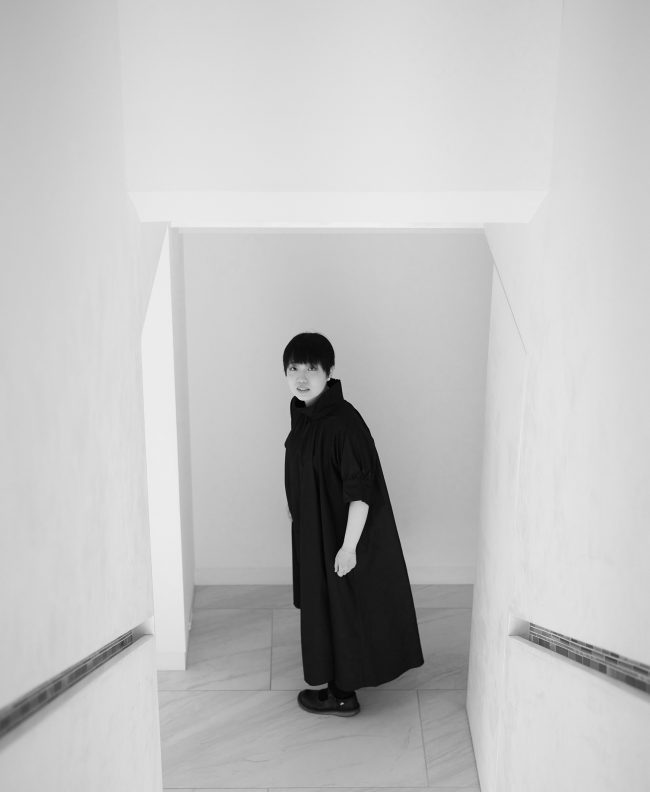
Shiori Horie
(b. 1992, France)
Graduated from Tama Art University (Japanese Painting). Awards include the Gotoh Memorial Cultural Award, VOCA Honorable Mention (2022), Takashimaya Art Prize (2023), and more. Notable exhibitions include solo shows at √K Contemporary and major museums such as the Museum of Modern Art, Kamakura & Hayama, Setagaya Museum, and Okawa Museum. She has also provided cover illustrations for books, including Yoko Tawada’s The Emissary (Kodansha, 2014) and others.
Website: https://www.shiorihorie.com/
Shiori Horie
(b. 1992, France)
Graduated from Tama Art University (Japanese Painting). Awards include the Gotoh Memorial Cultural Award, VOCA Honorable Mention (2022), Takashimaya Art Prize (2023), and more. Notable exhibitions include solo shows at √K Contemporary and major museums such as the Museum of Modern Art, Kamakura & Hayama, Setagaya Museum, and Okawa Museum. She has also provided cover illustrations for books, including Yoko Tawada’s The Emissary (Kodansha, 2014) and others.
Website: https://www.shiorihorie.com/

Atsuki Fujimoto
(b. 1997, Mie Prefecture)
Completed an MFA in Fine Arts (Oil Painting) at Kyoto University of the Arts. Fujimoto carefully selects and manipulates his materials to complement the textures of his painted subjects. His work often focuses on textiles and fabric surfaces, using their coarseness or delicacy to express softness, light, and the flow of air.
Atsuki Fujimoto
(b. 1997, Mie Prefecture)
Completed an MFA in Fine Arts (Oil Painting) at Kyoto University of the Arts. Fujimoto carefully selects and manipulates his materials to complement the textures of his painted subjects. His work often focuses on textiles and fabric surfaces, using their coarseness or delicacy to express softness, light, and the flow of air.

Kanji Yumisashi
(b. 1986, Mie Prefecture; based in Tokyo)
Works on themes of suicide, remembrance, and welfare. After losing his mother to suicide in 2015, the recurring motif of a “bird with a golden ring” became central to his practice. He launched a project in 2021 exploring Japan’s wartime past through the lens of Manchukuo.
Recent exhibitions include “Class 4-2” (2025), “Folktales, By the Way” (2024), and “Place Beyond” (2023, Oku-Noto Triennale).
Website: https://yumisashi-kanji.com/
Kanji Yumisashi
(b. 1986, Mie Prefecture; based in Tokyo)
Works on themes of suicide, remembrance, and welfare. After losing his mother to suicide in 2015, the recurring motif of a “bird with a golden ring” became central to his practice. He launched a project in 2021 exploring Japan’s wartime past through the lens of Manchukuo.
Recent exhibitions include “Class 4-2” (2025), “Folktales, By the Way” (2024), and “Place Beyond” (2023, Oku-Noto Triennale).
Website: https://yumisashi-kanji.com/

Jeong Ok Ri
(b. 1991, Tokyo)
Graduated from the art program at Korea University in Japan. Her work explores themes of diaspora, identity, and symbols through solo and group exhibitions in Japan, Korea, and Europe. Recent exhibitions include “BLUEPRINT” (2023), “Simulated Window” (2022), and the VOCA Exhibition (2020), where she received an Encouragement Prize.
Jeong Ok Ri
(b. 1991, Tokyo)
Graduated from the art program at Korea University in Japan. Her work explores themes of diaspora, identity, and symbols through solo and group exhibitions in Japan, Korea, and Europe. Recent exhibitions include “BLUEPRINT” (2023), “Simulated Window” (2022), and the VOCA Exhibition (2020), where she received an Encouragement Prize.
EVENT
-
Opening Performance | Sculpture Should Be Eaten by Rin Nakanishi2025.08.15 5pm


